This article was part of FORUM+ vol. 33 no. 2, pp. 72-79
Teaching decoloniality in the art school. Lessons in decolonial pedagogy through the arts in Belgium (2018-2025)
U. Laura Nsengiyumva
This article reflects on my years of teaching decoloniality through the arts (2018-2025), within the framework of my performance studio Radical Presence and the seminar Mapping (de)colonial Belgium. Drawing from this experience, it seeks to document a generation of art students engaging with Belgian colonial history, alongside their educator’s efforts to advocate for its place in the curriculum.
In dit artikel blik ik terug op mijn jarenlange ervaring met het onderwijzen van dekolonialiteit via de kunsten (2018-2025), binnen het kader van mijn performance studio Radical Presence en het seminarie Mapping (de)colonial Belgium. Op basis van deze ervaring tracht ik een generatie kunststudenten in beeld te brengen die zich verdiepen in de Belgische koloniale geschiedenis, naast de inspanningen van hun docent om te pleiten voor de inclusie van dit onderwerp in het leerplan.
Introduction: what is teaching decoloniality...
Between 2018 and 2025, as a PhD teacher at KASK, my task was to educate in relation with my research, Shaping the presence of the African Diaspora in Belgium.1 As an architect, artivist and researcher, the challenge was to engage with colonial history through the lens of my visual and spatial sensitivity. Together with the students, we began filling an educational void that many experienced as a betrayal by the school system. We confronted intergenerational silences and beliefs, such as the notion of a Belgian “civilising mission”. We worked through uneasy emotions such as white guilt and white fragility, transforming them into a deeper civic sense. In a society undergoing a cultural shift around its colonial past, and in the absence of adequate formal education, culture has become central to the decolonisation of minds. From culture may emerge new collective imaginaries and values, shaping how societies respond to contemporary crises. From genocides to ecocides, these crises remain deeply entangled with the legacies of colonialism. Decolonizing art education is therefore not only urgent, but also a matter of students’ rights: is it not every student’s right to get the intellectual tools to challenge any oppressive ideology? As bell hooks reminds us, education carries the inner potential to be a “practice of freedom.2 “Aesthetic education” in particular, as Gayatri Spivak states, is an essential space for ethical thinking in a democracy.3 In this spirit, this article documents and reflects on a collective experiment in decolonial art education.
Is it not every student’s right to get the intellectual tools to challenge any oppressive ideology?
Whether in the studio or in theory, the central theme in all my teaching is what I call here “decoloniality”. The term “decoloniality” brings out explicitly that which was not possible due to the delegitimization of this theme in the institution. Was it a “colonial history” course? Not only that. Was it an “anti-racist” course? Also. The prefix “de-” expresses a commitment to active societal transformation.
Because pedagogy is inseparable from its political and institutional context, the first part of this article examines the national and institutional frameworks that both enabled and constrained my pedagogical agency. The institutional context adopts a narrative approach to identify the obstacles that the decolonial mission encounters in the specific context of art education. The second part focuses on the lessons learned from both courses I taught. Drawing on the outcomes of these assignments, I identify key concepts and skills that emerged through this process and were experienced as traces of a pedagogical experiment that otherwise would go largely unacknowledged.
In conclusion, I advocate for the decolonization of art schools through a series of recommendations addressed to all institutional actors.
...in the Belgian educational context?
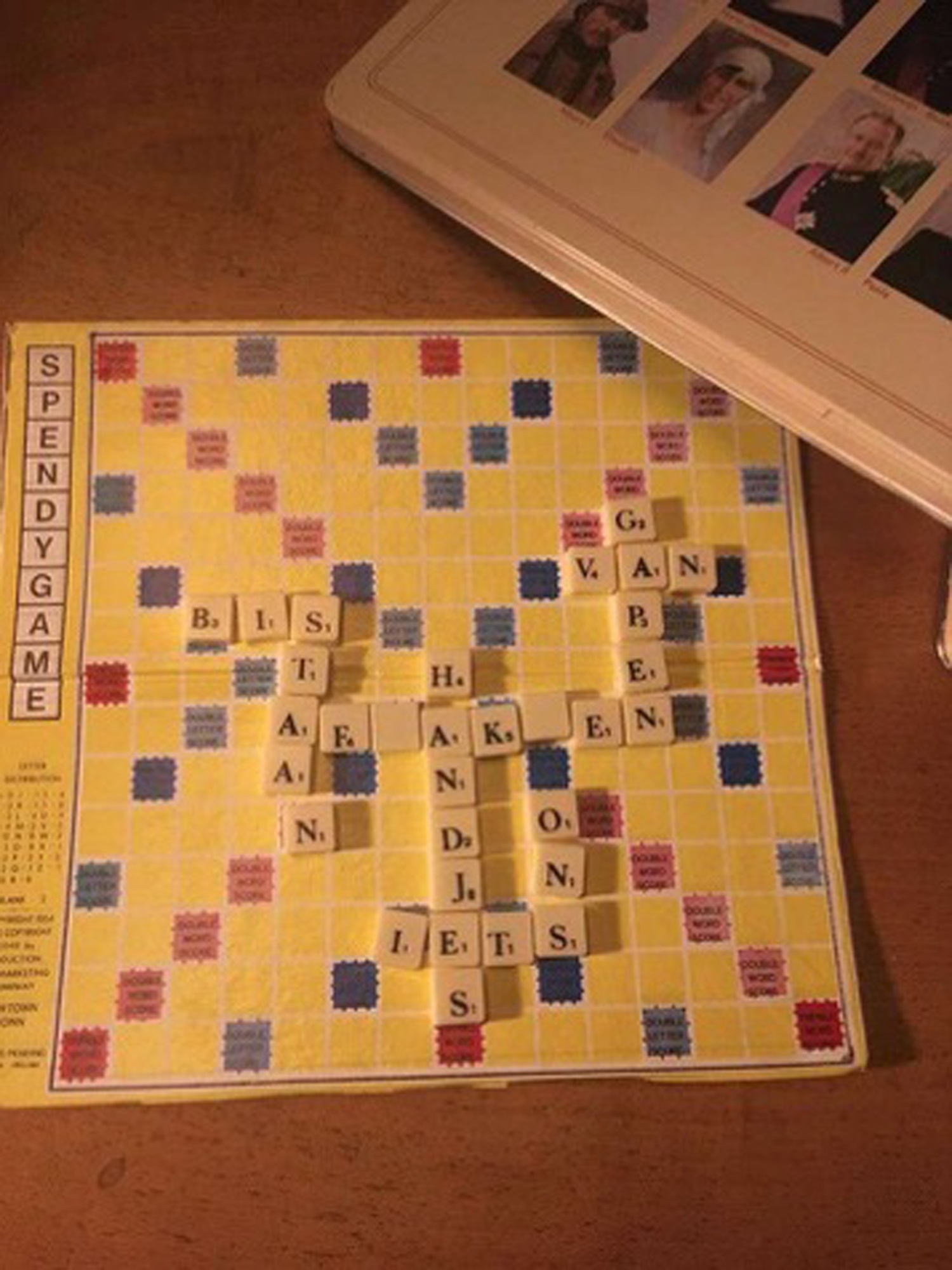
Fig. 1: Friedle De Meyere, Titus De Sutter, Anaïs Maes, Delphine Mertens, and Maïthé Truysensen, Groetjes uit een (h)eerlijk verleden, 2018, collective performance, SMAK, Ghent. Photo by U. L. Nsengiyumva.
In general, the Belgian educational context did not focus on Belgian colonial history until 2018. However, it is still rare and under-represented. According to historians Denise Bentrovato and Karel Van Nieuwenhuyse, the teaching of colonial history has slowly shifted from triumphalist narratives towards more critical perspectives.4 Nevertheless, it is more characterized by oblivion and ambivalence.
In addition to being marginal and incomplete, contemporary educational discourse appears to orbit around recurrent framings:
- Colonialism as a global phenomenon might be increasingly criticized, yet Belgium’s own role is often excluded from that critique.
- Abuses, when acknowledged, are often attributed to a few “bad agents”, rather than systemic policy.
- Belgian colonialism is presented as a “civilizing mission”, a well-intentioned project gone wrong.
- Postcolonial crises are framed as “African problems” due to their incapacity or tribalism, rather than as a colonial legacy.
- Belgian colonialism is restricted to the Democratic Republic Congo (DRC), with little attention to Rwanda and Burundi,5 and a complete erasure of other Belgian colonial projects such as those in Mexico or China.
Several Belgian scholars have attempted to quantify this educational gap. In 2008, 25% of final-year secondary students did not know that the DRC had been a Belgian colony.6 Students also grossly underestimated the economic disparity between Belgium and the DRC, imagining that Belgians consumed only six times more petroleum than the Congolese, whereas the average Belgian consumes 400 times more than the average Congolese. Which raises questions about their ability to comprehend the impact of colonialism on humans and nature, if not informed properly. A more recent survey unveils the factual knowledge of the average Belgian and confirms the perpetuation of collective ignorance.7 On an average basis, Belgians answered only four out of the twelve survey questions correctly. Only 6.3% knew that Rwanda and Burundi were once colonised by Belgium. None of the surveyed questions addressed more substantial historical facts, like the deadly construction of the Matadi railway, or the spread of the racialist “Hamitic hypothesis”.8 Greater awareness of these facts could help grasp the coloniality of contemporary crises in the Great Lakes region of Africa.
This educational ignorance is not due to a lack of historiography. Actually, Belgian academia has made significant progress in reassessing colonial history. After a two-decade long omerta following the independences of the former Belgian colonial territories, scholars in the 1990s shed light on some of Belgium’s colonial blind spots. From this space in time a movement emerged that Idesbald Goddeeris and Sindani Kiangu referred to as “Congomania”,9 which was in tension with an ambient resurgence of a nostalgic colonial discourse.10
Yet, at all levels of education below the doctoral level, curricula still lag behind. The awaited “change of mentality” seems not to reach the classroom, in part due to the limited literacy on the subject of the teachers themselves. Data suggest that waiting for a generational turnover of teachers will cost us generations. Actually, this educational void persists despite a young teaching workforce. In 2018, 78% of the teachers of secondary schools were aged under 50.11 This implies that most of these educators experienced the omerta of the 1980s or the postcolonial melancholia of the 1990s themselves while being a student. As a result, six decades after the wave of independences, the only intergenerational transmission remains one of silence.
The lack of percolation between research and schools could also be explained by some unspoken nationalist goal: history education is expected to induce civic pride. Along with the fragile national identity of a federal Belgium, this makes it difficult to fully integrate uncomfortable truths.
Education as a regional competence implies differences and similarities between Flanders, Brussels, and Wallonia in their approaches to colonial history. The main similarity lies in their disengagement; for history classes, none of the three regions impose official subjects. They operate around a set of skills to acquire. Textbooks are commercial products often authored by the teachers themselves.12 Ideological framings reflect the different regional identity politics. Flemish textbooks already contained traces of anti-colonial discourse in the 1980s, but the strong emphasis on the role of Leopold II was still at the service of a broader critique of the monarchy embedded in a regionalist narrative.13 In response to the Black Lives Matter movement, in 2020, Ministers of Education of both communities, the Flemish Nationalists (NVA) and French-speaking (Socialists), committed to explicitly address colonialism in the learning goals.14 Five years later, however, in both regions the theme is only vaguely mentioned, with no obligation to actually teach it.15
...in the art school institutional context?
The following analysis adopts a narrative and a situated case study approach, based on my experience as a PhD teacher in KASK between 2018 and 2025. KASK’s position as a major Flemish art school makes it both a specific case and a reflection of wider structural patterns. Moreover, proximity allowed me to observe the interplay of macro- and micro-politics at work. This testimony draws on lived experience, interviews, internal communications, and annual reports.
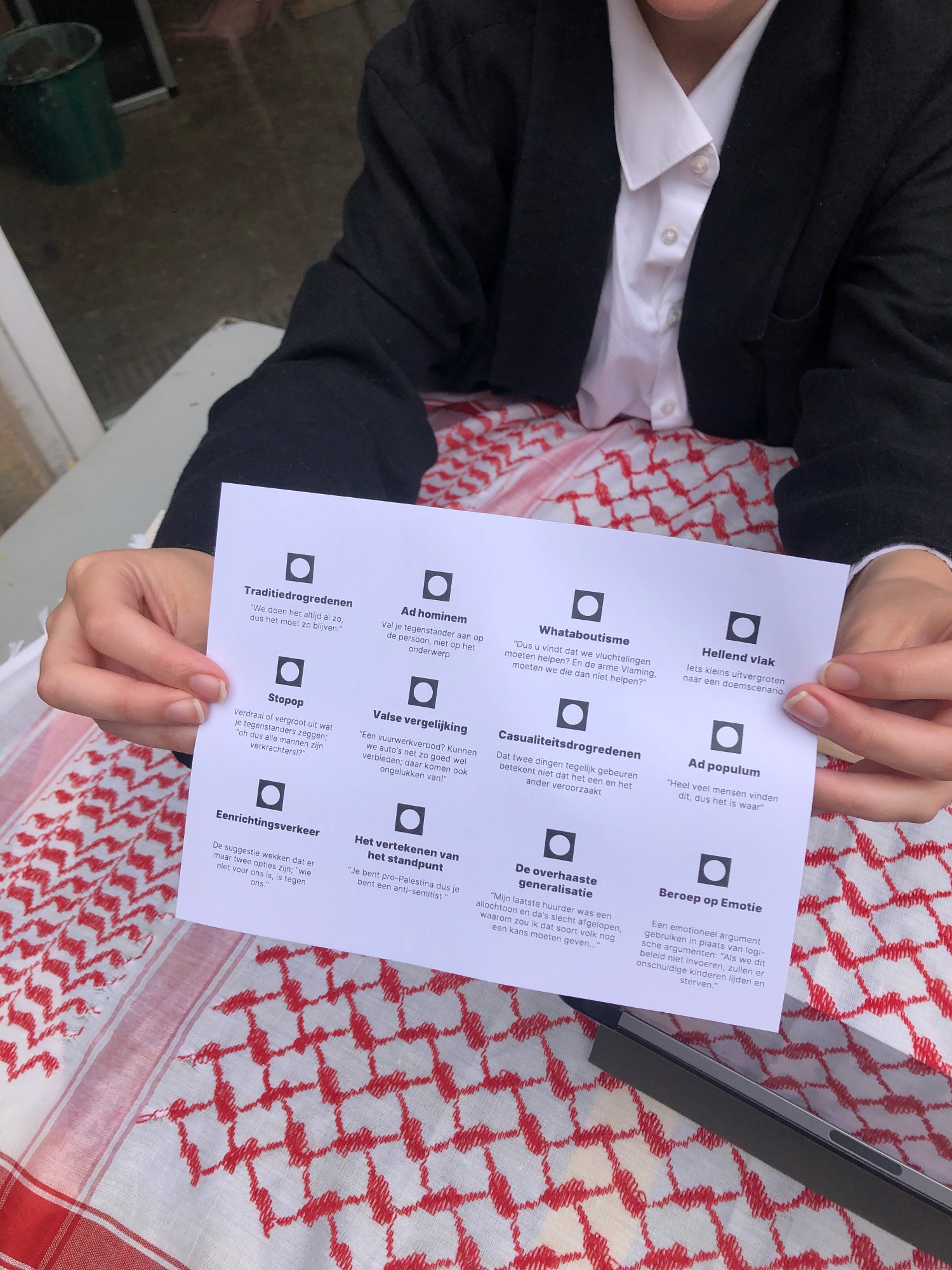
Fig. 2: Charlotte Bracke, Julia Butter, Luna Clarke, Norien Ewane, Indira Pinto Santana, and Ewa Yasebo, Stem Verstandig, 2024, collective performance /installation, Campo, Ghent. Photo by U. L. Nsengiyumva.
KASK’s story of politically engaged students and teachers had begun long before my arrival. Whether explicitly articulated or not, decolonial content was already present in the practice of fellow teachers An Van Dienderen (film), Renzo Martens (film), and Chokri Ben Chikha (drama). The idea that my arrival signified progress could not be sustained; at best, it reflected continuity. This became apparent when the administration provided significant support during periods of far-right political backlash against my art. Yet, despite this fertile situation, why did it still feel as if we were losing ground?
In 2018-19, I witnessed what resembled a momentum. Several initiatives were launched under the banner of “decolonization.” I was invited to join the Decolonial Research Group, initiated by teachers, researchers, and students. To be honest, my participation quickly became minimal, as did that of Olave Nduwanje, coordinator of Studium Generale and, at that time, the “other” Black employee. For us, the group was one of the many “invitations” we honoured with countless extra hours. We were too busy trying to be the change. As tiring as it was, we also both faced obstacles in the integration of our decolonial work into the curriculum.
Olave recalls her rejected research project: a decolonial training programme for staff. She had been invited to submit this proposal and accepted out of good will. For eligibility reasons, she had to apply in tandem with another researcher from the Decolonial Research Group. Close to the submission date, her co-researcher left the project for personal reasons without looking for a replacement. As a result, this unbalanced engagement in being the change gave the jury what felt to her like an “official” excuse of ineligibility. Unofficially, she recalls ambiguous remarks on the fact that the training would be mandatory (it was not), or that the canon “had to be respected”.
I was struggling as well in the meanders of the institution. Yet, the memories of my studio class, of my students, still fill me with joy and hope. We were being the change, living the dream dreamt by so many before us; four hours a week dedicated to decolonising our minds. In contrast to Olave’s project, my research was already officially validated and integrated in the curriculum. The results were clear in the students’ enthusiasm and outcomes. But after two years of a conflictual situation with only one colleague, this safe place became jeopardized. This colleague advanced contradicting arguments during teachers’ meetings. It was vehemently argued that my class was “too political”, although some other classes, such as those approaching feminism or ecology, were as politically thematized as mine. My class was then singled out for performing outside the school, which again was the practice in other classes, etc.
The quiet solidarity of my colleagues did not prevent the situation from escalating. What began as a pedagogical debate was reframed as a ‘conflict’ and brought before the then Dean. As a ‘compromise’, the Dean accepted my colleague’s proposal to reduce the course to a non-mandatory one, on the grounds that students should not be forced to engage with “political” questions. What followed were years of homelessness within the school: my studio was cancelled, until re-emerging two years later as a minor elective class, on my own initiative.
How could one contrary opinion carry so much power, and how could this be, in this time and space, presented as a “solution” rather than a failure? All possible solutions were already thought through and written in a letter by the Decolonial Research Group to the then newly appointed Dean, listing urgent recommendations such as:
- Questioning the Eurocentric nature of the curriculum.
- Establishing a code of conduct in case of acts of discrimination or harassment.
- Continuous training of the teachers.
Alongside the research group, a parallel movement was led by some students under the slogan “Decolonise the curriculum”, pleading for more inclusion in theory classes’ content. This led to a confrontational Council of Theory (Theorische Omkadering) in November 2019, between students and representatives of Theory.
Still, we were losing ground. Faced with a reluctant administration, both movements ran out of breath. The Dean resigned after only a few months, taking our dreams with them.
Contextualization implicitly assigned artists a central role in mediating colonial memory, opening a space for the emergence of a postcolonial visual culture.
In my last year, not much had changed in how issues related to race were handled. Symptoms were still labelled as “conflicts” and treated as such. For example, colleagues from another department called for help. The few non-white teachers were invited to mediate what was framed as a “conflict between students.” As a matter of fact, an assignment from a teacher was experienced as racist, and this had split the group into two very identifiable factions. I accepted performing my share of unacknowledged “diversity hours” for the sake of the students. A few workshops helped to regain some group cohesion, but could not prevent such harm from recurring, since none of the concerned teachers attended.
These testimonies reflect an epistemology of complaint, one that is not unique to KASK, according to Sara Ahmed.16 For black educators, this produced a form of conditional inclusion : decolonial discourse may be institutionally welcomed, but in the margins. The progressive removal of my assignment-based studio towards a mentoring position reflected Spivak’s analysis of subalternity;17 silencing went along with a reduction of my educational duties. This echoes broader experiences among Afro-Belgians, whose professional advancement often remains constrained despite high levels of qualification.18
The impact on black and brown art students is not yet measured, but the ones I encountered were highly resilient and unapologetic in their practice. However, many experienced cycles of disengagement, and reported feeling ‘misunderstood’. Some of them participate in extracurricular initiatives of residencies or mentoring programmes, like PocPoc by the curator Magali Elali, as alternative spaces for artistic growth.
Radical Presence studio
Let us now retrace the journey of the Radical Presence studio, the studio that got away, as explained above. Conceived as an “artivist” practice of collective performance, this studio was designed as a tailor-made course for the newly established Performance trajectory. It ran in this form between 2018 and 2019, before being discontinued and later re-emerging as a cross-disciplinary elective minor between 2022 and 2025. This analysis draws on a non-chronological selection of archival works.
Despite the risk of being misinterpreted, the choice of the word “radical” (from the Latin word for root) referred to the uprooting of the historical roots of racism. As for the notion of presence, it resolved an initial discomfort with the word “performance”, that I found was too heavily charged in relation to histories of exploitation.
My idea of performance was first influenced by relational art and grassroots practice. As I was convinced that collectivity was inseparable from artivism, I made group work the sole rule of the studio’s assignments, adding that rules were to be challenged. This contrasted with the school’s culture of individual practice, and was then pointed out by my sceptical colleague. I expanded my theoretical framework to explain that true collectivity was not about the number of authors, but about the prominence of the “We”, as in the conception of performance developed by the curator and theorist Catherine Wood.19 The “We” being one of the three ingredients of live situations that draw the audience into a negotiated sense of collectivity, continually questioning who is included or excluded.
My aim was even more ambitious. Through a decolonial lens I tried, as Sylvia Wynter’s philosophy highlights, to use the transformative potential of collective practices to rewrite the terms of the human (beyond the Western Man) and enact new modes of being and relating.20
The title Radical Presence also referenced a 2014 New York exhibition of Black performers. It challenged participants to confront the historical burden inscribed in their bodies and those of others.
The first of our four hours was dedicated to the “book club”; thirty minutes of reading books, preferably from the class booklist, and thirty minutes to discuss what each of us had read. Having a common theoretical ground served us greatly as it informed the students’ positioning in collective work.
The other three hours were completely dedicated to practical exercise. The approach was to bring a racially charged current event to the students’ attention and invite them to create around it, collectively. After research and sensitive analysis, the students would inevitably discover the root causes: racial theory and colonial propaganda. Rooting those assignments in the present enabled students to grasp history as patterns rather than as a linear, chronological sequence of events. Combining the “here and now” empowered an activation of critical awareness, linking past and present. Below are several examples of creative output.
A first example, Groetjes uit een (h)eerlijk verleden (Greetings from a glorious past), illustrates how students reflected on an event that had happened during the summer of 2018, just before the school year in Belgium. At the Pukkelpop music festival, during Kendrick Lamar’s show, youngsters of their age had sung Congo is van ons (Congo is ours) to intimidate two young Black festivalgoers. The chant belongs to Flemish student folklore, popular amongst socially privileged fraternities. The students identified this chant as an “oral archive”, which, along with our monuments and other colonial traces, explicitly tells a story that Belgian society simultaneously displays and denies.
Visitors to the S.M.A.K. museum encountering the Groetjes… performance slowly discovered those lyrics embedded in the décor that was transformed into a familiar space much like a living room; on cookies, on embroideries, on the Scrabble board (Figure 1), and so on. At the exit, the performers lined up to declaim the lyrics, confronting the audience with the explicitness of the song; “chopping hands for diamonds and rubber”.21 These two spaces recreated a typical Belgian dissociation: a society surrounded by colonial symbols, yet unable to consciously reconcile them with the violence they represent. At the exit, visitors received a postcard with rearranged lyrics, offering a form of ‘poetic justice’ to the victims of colonisation.
Through its spatial dramaturgy, Groetjes… gradually unveiled a Belgian postcolonial nostalgia that was hiding in plain sight. In a tragic synchronicity, this performance coincided with the day of a fatal hazing ritual of a Black student named Sanda Dia,22 during which his perpetrators also sang Congo is van ons.23
Students recurringly questioned their legitimacy to address racism, as most of them were white. These uneasy feelings surfaced during the collective feedback session of the Groetjes... performance. Although the work had apparent qualities, an incident with a visitor requestioned their whole positioning. As a Black person, this visitor had voiced their disagreement with the piece stating it was violent.
The risk of slipping into performative activism was real. Drawing on anti-racist authors Robin DiAngelo and Reni Eddo-Lodge, whose works examine whiteness, this recurring discussion shifted the students’ positionality from white guilt to responsibility. Over the years, this became a shared vocabulary passed on from one cohort to the next. As Eddo-Lodge stresses, anti-racist work requires confronting systemic racism and one’s own position within it, rather than seeking absolution.24
Responsibility was at the centre of another performance, Stem Verstandig (Vote Wisely), an outcome of my assignment WTF is woke with you? that took for its subject the “anti-woke” discourse surrounding the electoral year of 2024. Students analysed anti-woke literature and concluded that the term “woke” functioned as an empty catch-all pejorative for any kind of progressive politics. It does not mean much, although the anti-woke movement is very much identifiable.
An immersive installation encouraged visitors to “vote” at a divided round table, symbol of a polarised statistic scheme, while surrounded by audio excerpts of Belgian politicians’ anti-woke quotes, such as “there are only two genders”, or “LGBT and the whole alphabet”. Voting options (Figure 2) were labelled with political manipulation tactics, as stated by the theory of logical fallacies;25 making false comparison, hasty generalization and appeal to tradition to name a few. The anxious atmosphere echoing the distraction of populist rhetoric made voters struggle to find focus. Stem Verstandig educated audiences on manipulation strategies while raising alarm about the rise of extremist discourse.
The ability to translate political statements into an artistic language proved to be the students’ greatest motivation for joining my studio. With each cohort, the studio expanded its own visual vocabulary. Temporality became an element of this language. Performances no longer followed the logic of a beginning and an end. As a result, a productivity-driven idea of time was disrupted, allowing performances to unfold in a relational rhythm. At showing sessions, the students would first apologize for not being ready; their decor or costume was according to them “not done”. I would argue that, maybe, this was a radical presence.
One of many examples was Reparations, the work of Norien and Julia. The class started while they were painstakingly placing hundreds of payment reminder letters – one for each month since the DRC’s independence – into envelopes addressed to the Belgian state. The performance had already started. We – their fellow students and I – helped them fold the letters.
Another trademark of the studio was the “freeing of political colours”, which began with the performance The Wall Cannot be White. This responded to a scandal in Ghent surrounding Schild & Vrienden, an extreme-right student group led by the infamous Dries Van Langenhove.26
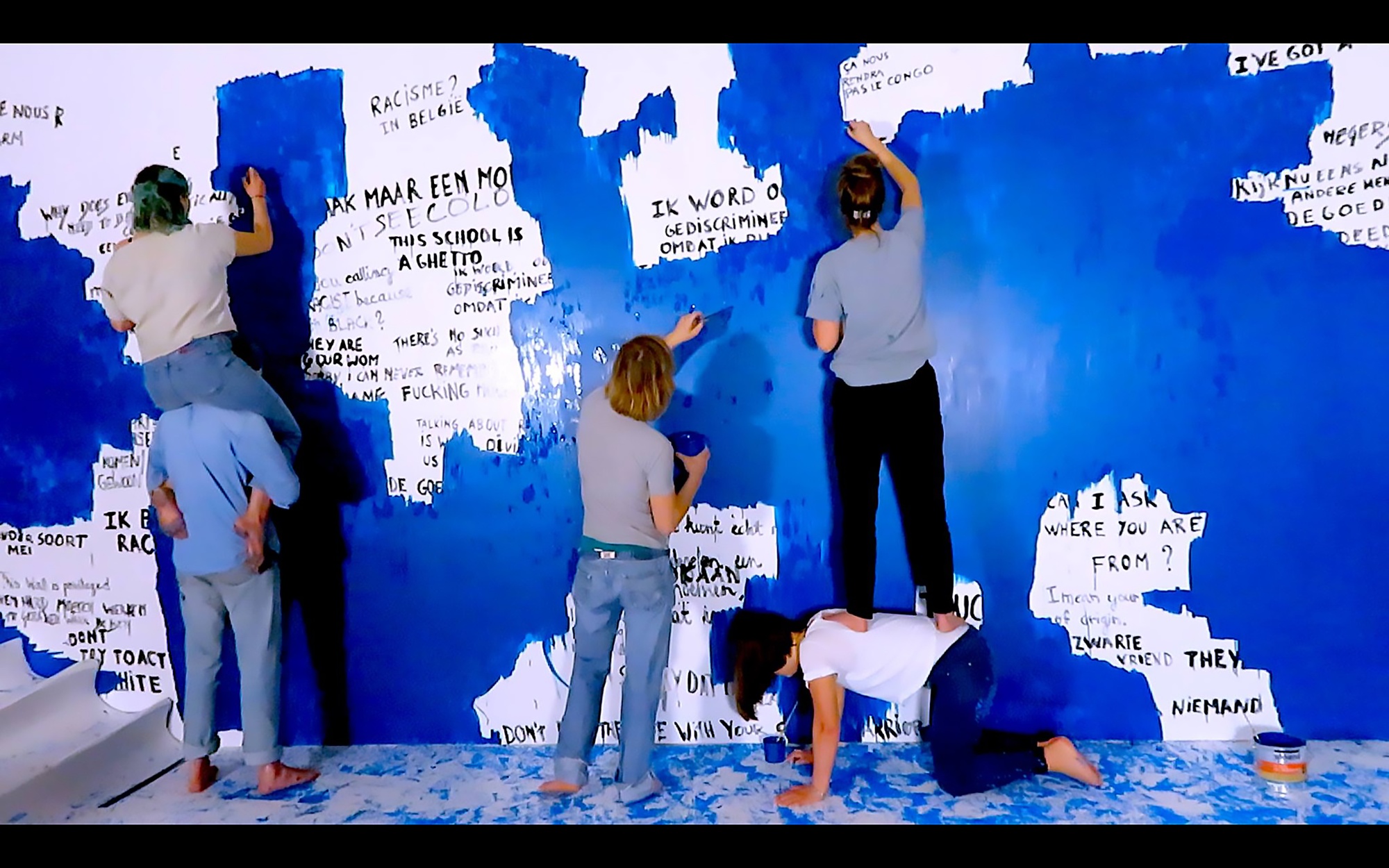
Fig. 3: Eva Luna Moons, Marthe Thys, Nicolas Van Laere, and Petra Nela Pučeková, The Wall Cannot be White, 2019, collective performance, Vooruit, Ghent. Photo by Daan Broos.
The students staged an interactive performance as a fictitious countermovement, and, as they said, “stole back” the colour blue from Schild & Vrienden’s graphic chart and uniforms. The audience activated the performance by reading aloud excerpts from Robin DiAngelo’s White Fragility.27 While someone read, the group painted the wall blue (Figure 3); if no one read, they had to write down common phrases of unconscious racism (“I have a Black friend,” “I’m also discriminated against because I’m fat,” and so on). The irregular rhythm of visitors created striking visual tension between the blue paint and the racist inscriptions. Gestures of solidarity emerged as students carried each other to reach higher spots on the wall. Performed in Vooruit (later renamed Viernulvier), the cultural institution of proudly progressive Ghent, the audience was half amused, confronted with the failures that allowed Schild & Vrienden to flourish.
To reach this level of insight, teaching itself had to be highly relational. The student/teacher dynamic needed constantly to be rebalanced. Redistribution of power was one aspect of accountability. As bell hooks reminds us, in the transgressive classroom every member’s participation is essential to mutual learning.
Mapping (de)colonial Belgium
Conceived as the participatory counterpart to my PhD research, Shaping the Presence of the African Diaspora in Belgium, the seminar Mapping (de)colonial Belgium extended my own attempt to engage with colonial history through a visual and spatial lens. As an architect, artivist, and researcher, I was interested in how colonial ideology remained embedded in the symbolism of our public art, and less visible traces that shape public space. Mapping offered a common language through which students from different artistic backgrounds could contribute to this participatory process.28
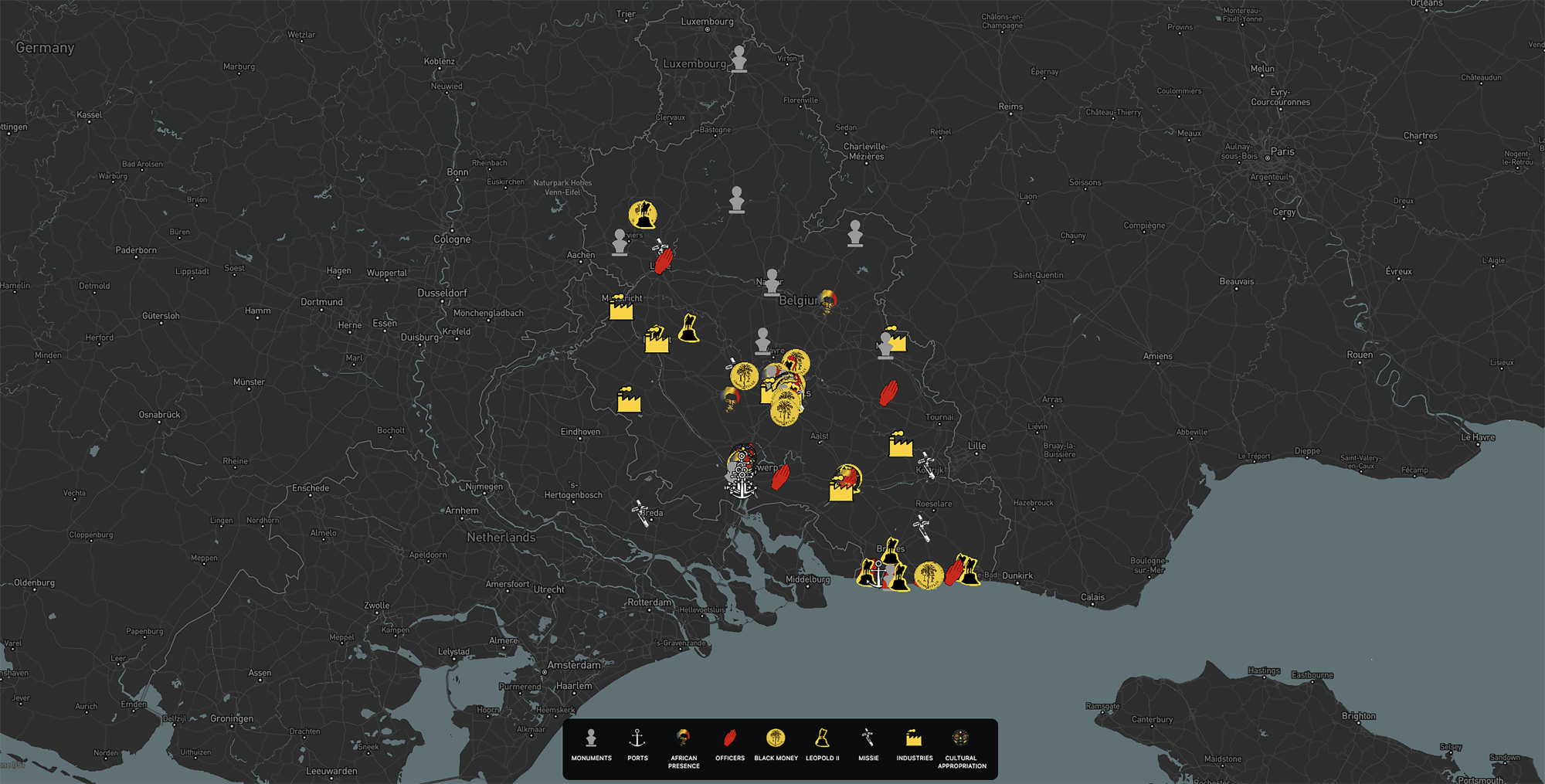
Fig. 5: Zoom on Belgium. Screenshot. Mapping Colonial Belgium, mappingcolonialbelgium.com. Accessed 17 Dec. 2025.
Mapping was not chosen solely because it speaks my first language. It is precisely because it was about acquiring a tool of counter-resistance that the seminar was a “practice of freedom”. For peoples subjected to colonial violence, cartography holds a particular collective and political relevance. Historically used as a weapon of colonial domination, as in the Berlin Conference of 1884-85, or by the explorers, mapping can, when turned against the colonial machine, become a powerful decolonial medium. From Indigenous land claims, through Tiffany Chung’s subjective maps of memory,29 to the production of spatial evidence by Forensic Architecture, mapping has been reclaimed as a tool of resistance against political silence.
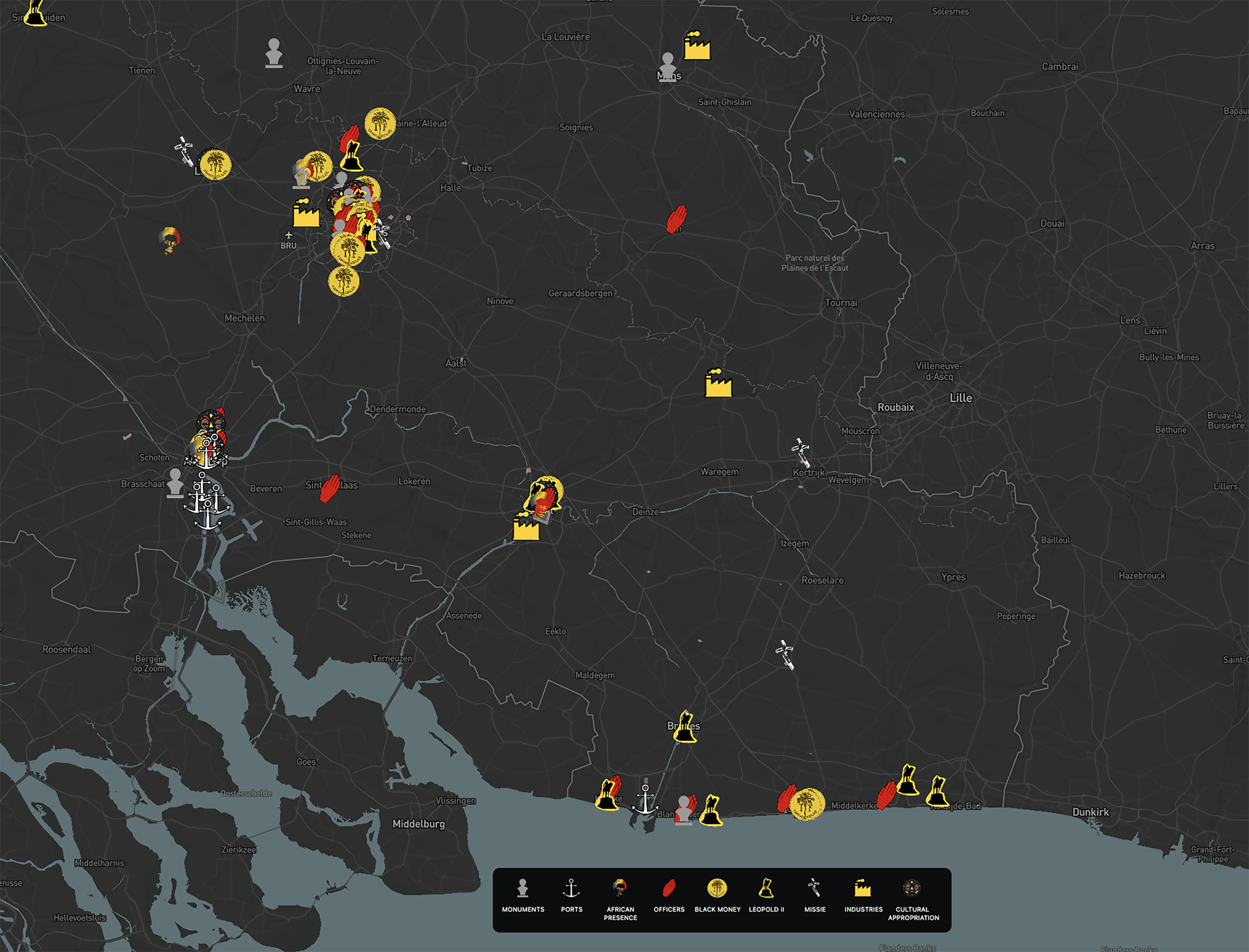
Fig. 6: Zoom on Flanders. Screenshot. Mapping Colonial Belgium, mappingcolonialbelgium.com. Accessed 17 Dec. 2025.
The assignment of the course was straightforward: to collect and share (as much) geographical information (as possible) about colonial Belgium. By using geographic data, the “geotags”, we translated our findings into a language familiar to digital users (as found on Google Maps). This system encouraged looking behind the most obvious traces, such as monuments and street toponomy. Less invisible traces – buildings that hosted institutions, events, immaterial heritage or even memories – were able to find their ways onto the map. The subjectivity of open-source cartography allowed a plurality of approaches to converge within one space of mutual learning.
In the national debate, across the political spectrum, “contextualization” emerged as the dominant response to colonial traces in public space: a polysemantic term whose meaning varied depending on who used it. It could refer to anything from an explanatory board to an artistic intervention. For the latter, contextualization implicitly assigned artists a central role in mediating colonial memory, opening a space for the emergence of a postcolonial visual culture. I encouraged students to dissect this political stance by creating illustrations for their texts. The co-design of the map itself raised substantial questions of ethical design: one group decided to turn the map upside down to confront the mapping community’s reliance on the Mercator projection, notorious for its imperial distortions. Choices around layers and symbols of the legend also deepened their understanding of systemic oppression: the “Missionaries” layers highlighted the church’s role, while the “Black money” layer, inspired by Lucas Catherine’s book Bouwen met zwart geld,30 showed buildings financed by colonial wealth. Such design work expanded both their individual and collective visual vocabulary, which is vital to redefining the aesthetics of power that shape our surroundings.
Students chose their geotags freely, drawing from personal interests (music, architecture, and so on), field research, or family archives. Each choice became an entry point into colonial history. This element of choice nurtured critical awareness of their surroundings and sustained their motivation. Along the way, I mentored them and suggested theoretical inputs. Looking more closely at the students’ critical literacy in symbolism, the texts of Debora Silverman, a leading scholar of Art Nouveau, were of great help to recognize signs that underpinned colonial visual culture: Leopold’s star, the flowing curves ... and the elephant.
For example, a mapper named Kadia had found a 1950s Côte d’Or sticker book at a flea market. Consumers once collected stickers from chocolate wrappers to complete Faunaflor Congo, an encyclopaedia of “our Congo” (sic). This iconic Belgian chocolate brand still bears a strong colonial imprint, most visibly in its elephant logo. One defined passage of Faunaflor caught Kadia’s attention: it praised the taming of elephants as a Belgian specialty, describing how a few “monitors” were trained to punish the other elephants. Kadia identified this technique as an allegory of the colonial “divide and conquer” mindset that was also used on human beings. Elephants, presented as majestic figures, do not symbolize true nobility here, but rather submission. While elephants were nearly exterminated by the ivory trade, they lived on in Belgium’s imagination as the ultimate “elephant in the room” of colonial memory.31
Another participant, Nancy, worked on the botanical garden of Meise, exploring how botany served the colonial enterprise. This recurring interest in zoos and botanical gardens amongst the students required some notions of Decolonial ecology,32 for its deconstructive approach to the systems of classification that legitimized the exploitation of both nature and humans. Belgian botanical sites, such as the Greenhouses or the Colonial Garden of Laeken, remain a troubling legacy: celebrated for their beauty, yet historically entangled with the colonial project and, in some cases, the “Royal Donation”, a gift from King Leopold II to the Belgian nation, tainted by the violence and exploitation that financed it. The official communication and scenography obscure the economic role of the botanical gardens and the ecocides they enabled, as Malcom Ferdinand explains, by appropriating and erasing indigenous knowledge associated with the plants in the service of colonial domination. This silence promotes an understanding of ecology detached from questions of social justice. Nancy highlighted the persistent erasure of Indigenous plant names in existing labels by restituting its name to the “Malele or Kwango giant cycad”, misnamed “Encephalartos laurentianus”.
International students further expanded the field. Xiuyu, a Chinese exchange student, brought the often-overlooked Belgian concession of Tianjin (1902-31) into the seminar. With access to Chinese archives, he documented how Belgian investors extracted profits through the tramway and lighting company while reinvesting little locally. He illustrated his findings with rare archives, including the Chinese version of the Belgian franc. Afterwards, Xiuyu highlighted the power dynamics underlying the Belgian state’s retention of this territory. Belgium returned the Concession two years later than agreed upon with the Chinese government.33
Some local students, in turn, expanded the field inward, intersecting their own genealogies upon the map. These intimate researches were the most transformative; the students renegotiated the place of colonial memory within their own family narratives, turning archives or interviews into works of historiographic significance.
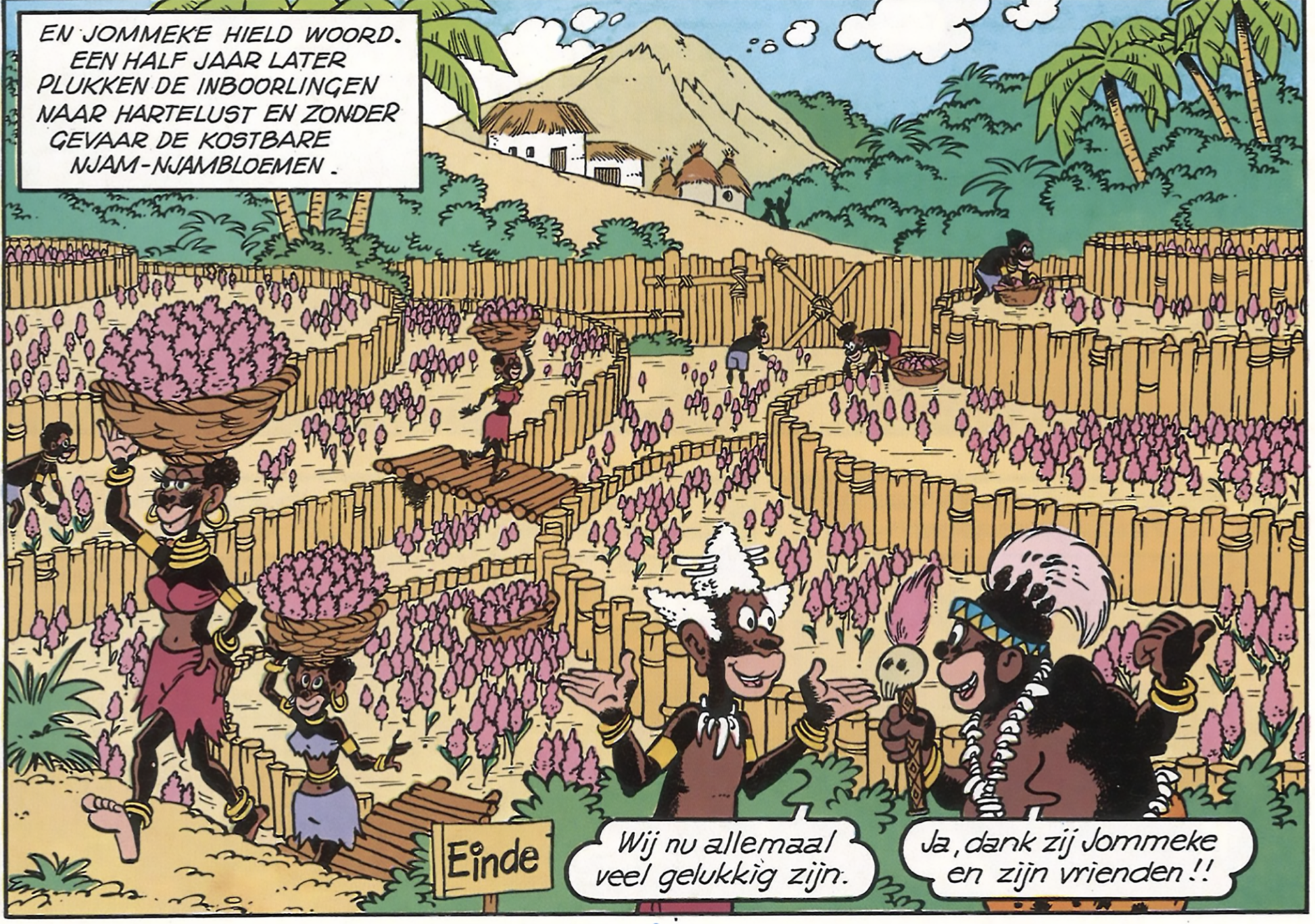
Fig. 4: “And Jommeke kept his word. Six months later, the natives were picking the precious yam-yam flowers to their heart’s content and without danger.” / “We all very happy” / “Yes, thanks to Jommeke and his friends” in Nys, Jef. Jommeke: De Njam-njam bloem. Uitgeverij Het Volk, 1977.
For her geotag on the port of Antwerp, a participant named Vennica interviewed her uncle Félicien, the son of a former Congolese sailor.34 This very rare testimony enlightens us on the condition of Black people in Belgium in the 1960s while making her own family’s place in Belgian history more tangible. In contrast, Yana’s grandmother’s memory of her visit to a human zoo sparked an intergenerational discussion in which she could put into words her confusion and reconsider it through today’s moral lens. Amber revisited her family’s comic book collection, notably the stories of Jommeke, by the Flemish author Jef Nys. She unpacked their racist caricatures and white saviour trope, interrupting the unquestioned transmission of colonial propaganda across generations.
These outcomes reveal how decolonial art education can serve societal transformation. Subjective cartography allowed sensitive relational approaches to expand this space of mutual learning beyond the classroom. It fostered multiperspectivism and interpretive skills. In the context of Belgian education, such points of encounter can foster broader intergenerational dialogues, helping to address decades of educational silence around colonial history.
Advocacy for the decolonization of art schools
Through the very contrasted trajectories of both those classes, we can conclude that teaching decoloniality challenges the culture in art schools on several fronts: its theory/practice divide, its favour for individual practice, its Eurocentrism, and the rigidity of its administrative structures. Yet beyond these challenges lies the possibility of a true renewal of education towards more porosity.
As noted in the introduction, the public/academic divide results in a failure of academia to make colonial knowledge more accessible. The interuniversity taskforce of the Truth and Reconciliation Commission urges higher education to uphold its duty of decolonial research and knowledge sharing.35 Credit-based recognition of such courses would restore agency to art schools, in the face of a lack of political will towards making colonial history mandatory. This reluctance reflects a broader political ambivalence towards the colonial past, illustrated by Belgium’s abstention in March 2026 on a United Nations resolution, adopted by a large majority, recognizing the transatlantic trafficking and enslavement of Africans as the gravest crime against humanity.
Equally necessary is the continuous training of teachers, in a way that does not preserve the traditional hierarchy of the teacher but invites them to adopt a learning position in the classroom, towards a collective creation of knowledge. In the Belgian case, acknowledging and addressing our educational void within the classroom would in itself be an act of leading by example.
Decoloniality, as an educational approach, must be valued for its potential to cultivate research and writing skills, historical awareness, and critical thinking.
However, training alone cannot substitute for the lack of inclusion of non-white teaching staff. Without opening the Pandora’s box of the debate on quotas, it should be clear that this is a matter of expertise. Such expertise does not derive solely from academic credentials, but also from lived experience and years of engagement with decolonial work. As decoloniality gains academic legitimacy, institutions must guard against reproducing a familiar colonial pattern: extracting knowledge from racialized communities while excluding them from positions of authority. A question that should guide any relevant job application: who is truly “able” to do the decolonial work? Who has been doing it already?
While the responsibility of those in charge must be called out, I also invite all collaborators to question how they themselves engage in mechanisms of subalternity – whether by asking non-white colleagues for punctual help rather than advocating for structural support, or, as the marginalization of my performance studio has shown, actively or passively participating in the academic discrediting of decolonial education. Decoloniality, as an educational approach, must be valued for its potential to cultivate research and writing skills, historical awareness, and critical thinking. Structural change can only happen if there is a very vocal demand for teaching decoloniality, therefore everyone must embody the change as if it depended on them.
Moreover, because art once served colonial propaganda, art schools have a particular role to play in the decolonization of minds. As aesthetics of power are being redefined, I encourage students to value, archive, and transmit their decolonial work. The impact of such courses extends beyond individual practice. It shapes how artists collectively see, represent, and engage with the world, contributing to the emergence of a postcolonial visual culture.
+++
Laura Nsengiyumva (she/her)
is an artivist, architect and researcher. Her actions, such as PeoPL and Queen Nikkolah, are part of her research Shaping the presence of the African diaspora in Belgium. Her transcultural view of history is based on human stories that invite us to find what brings us together.
Nsengiyumva is affiliated as an artistic researcher to KASK, the School of Arts of HOGENT, and to howest.
Footnotes
- Nsengiyumva, Uwizeye Laura. Shaping the Presence of the African Diaspora in Belgium. PhD dissertation in progress, Ghent University and KASK School of Arts (HOGENT), 2018-current. ↩
- hooks, bell. Teaching to Transgress: Education as the Practice of Freedom. Routledge, 1994. ↩
- Spivak, Gayatri Chakravorty. An Aesthetic Education in the Era of Globalization. Harvard UP, 2012. ↩
- Bentrovato, Denise, and Karel Van Nieuwenhuyse. “Confronting ‘Dark’ Colonial Pasts: A Historical Analysis of Practices of Representation in Belgian and Congolese Schools, 1945–2015.” Paedagogica Historica, Informa UK Limited, 2019. ↩
- Gilbert, Catherine. “Confronting the Colonial Past? Genocide Education in Francophone Belgian Schools.” Unfinished Histories: Empire and Postcolonial Resonance in Central Africa and Belgium, edited by Pierre-Philippe Fraiture, 2022, pp. 81-100. ↩
- Hirtt, Nico. “Seront-Ils Des Citoyens Critiques? Enquête Auprès Des Élèves De Fin d’Enseignement Secondaire En Belgique Francophone Et Flamande.” HAL Archives Ouvertes, Le Centre pour la Communication Scientifique Directe, 2008. ↩
- Azabar, Sarah, Fien Eelen, Bram Verbraeken, and Zoë Verleye. Dekolonisering, erkend maar onbeantwoord: Een onderzoek naar de impact van politisering op het publieke en politieke dekoloniseringsdebat in België. Universiteit Antwerpen, 2022. ↩
- This nineteenth-century hypothesis falsely attributed the advanced civilizations of the Great Lakes region to a cursed white race descended from the biblical figure Ham. For more information see “Colonial Roots of the Genocide in Rwanda | DW Documentary.” YouTube, uploaded by DW Documentary, youtube.com/watch. Accessed 14 Mar. 2026. ↩
- Goddeeris, Idesbald, and Sindani E. Kiangu. “Congomania in Academia: Recent Historical Research on the Belgian Colonial Past.” BMGN - Low Countries Historical Review, vol. 126, no. 4, 2011, pp. 54-74. doi.org/10.18352/bmgn-lchr.7442. ↩
- Stanard, Matthew. The Leopard, the Lion, and the Cock: Colonial Memories and Monuments in Belgium. 2019. ↩
- TALIS 2018 Results (Volume I): Teachers and School Leaders as Lifelong Learners. OECD Publishing, 2019. doi.org/10.1787/1d0bc92a-en. Accessed 1 Aug. 2026. ↩
- Gilbert, pp. 81-100. ↩
- Planche, Stéphanie. “Le ‘Roi colonisateur’ à l’école: Portrait ambivalent d’un (anti)héros.” In Léopold II: Entre génie et gêne. Politique étrangère et colonisation, edited by Vincent Dujardin and others, Racine, 2009, pp. 269-84. ↩
- Hope, Alan. “‘Syllabus for Secondary Students Will Include Colonialism,’ Says Weyts.” The Brussels Times, 2020. ↩
- Malenga Mwanga, Pauline, Lieven Miguel Kandolo, and Randy Kalemba. “Is België wel bereid om zijn koloniale verleden onder ogen te zien?” MO.be, 15 June 2020. ↩
- Ahmed, Sara. Complaint!. Duke University Press, 2021. ↩
- Spivak, Gayatri Chakravorty. Can the Subaltern Speak? Marxism and the Interpretation of Culture. University of Illinois Press, 1988. ↩
- Demart, Sarah, and others. Des citoyens aux racines africaines: un portrait des Belgo-Congolais, Belgo-Rwandais et Belgo-Burundais. Fondation Roi Baudouin, 2017. ↩
- Wood, Catherine. Performance in Contemporary Art. Tate, 2022. ↩
- McKittrick, Katherine. Sylvia Wynter: on Being Human as Praxis. Durham, Duke University Press, 2015. ↩
- This phrase refers to extremely cruel punishments doled out in Congo Free State, while it was privately owned by Belgian King Leopold II, when not enough rubber were extracted, resulting in the enslaved people('s children) losing limbs. These forms of torture were trivialized and ridiculed in the chant. ↩
- Sanda Dia, a Black 20-year-old Civil Engineering student at KU Leuven, died on 7 December 2018 after a hazing ritual organised by the student club Reuzegom. ↩
- Huyberechts, Pieter. “Amper schuldgevoel, maar cover-up.” De Standaard, 30 July 2020, standaard.be/nieuws/amper-schuldgevoel-maar-cover-up. Accessed 1 Sept. 2025. ↩
- Eddo-Lodge, Reni. Why I’m No Longer Talking to White People about Race. Bloomsbury Circus, 2017. ↩
- Logical fallacies are errors in reasoning that undermine the logic of an argument. They often appear persuasive but are invalid or misleading. ↩
- Dries Van Langenhove is known to have founded the far-right student movement Schild & Vrienden, exposed in 2018 for racist, antisemitic, and sexist online content. He was elected to the Belgian Federal Parliament in 2019 on the list of the far-right party Vlaams Belang. In 2024, he was convicted for racism and Holocaust denial; the conviction became final in January 2026. ↩
- DiAngelo, Robin J. White Fragility: Why It’s so Hard for White People to Talk about Racism. Beacon Press, 2018. ↩
- mappingcolonialbelgium.com. Accessed 17 Dec. 2025. ↩
- “Tiffany Chung Interview: Maps of Memory.” YouTube, uploaded by Louisiana Channel, 29 Nov. 2016, youtube.com/watch. Accessed 1 Aug. 2026. ↩
- Catherine, Lucas. Bouwen met zwart geld: De grootheidswaanzin van Leopold II. Houtekiet, 2002. ↩
- Silverman, Debora. Art Nouveau, Art of Darkness: African Lineages of Belgian Modernism, Part I. West 86th, 2011. ↩
- Ferdinand, Malcom. A Decolonial Ecology: Thinking from the Caribbean World. Polity Press, 2022. ↩
- Walton, Denzil. “Belgium’s Concession in Tianjin, China.” Discovering Belgium, 31 Aug. 2022, discoveringbelgium.com/belgian-concession-tianjin. Accessed 11 June 2026. ↩
- “MP 1.15u I Tonton Félicien I Stuivenberg.” Mixcloud, uploaded by Vennica Sidibanga Kaseye, 31 May 2019, mixcloud.com/MAPCOPODCAST-tonton-felicien-i-stuivenberg. Accessed 1 Aug. 2026. ↩
- Goddeeris, Idesbald, and others. Les universités belges et leur gestion du passé colonial. CREF, 2021, cref.be/communication/20211027_Gestion_du_pass%C3%A9_colonial.pdf. Accessed 1 August 2026. ↩
More from this dossier
Thinkering as method. Two educational laboratories at the nexus of research and artistic practice at Koninklijk Conservatorium Brussel
Jeroen Billiet
The academic career of the caterpillar track. Means of progression – Meaning of progress
Bert Willems
The art school in transition
Kevin Voets
More from this edition
Loud and bright, distorted, unstable. Alternative audiovisual perspectives on Shenzhen’s informal “low-fi” mediascape
Yaohan Zhang, Yujing Ma, Marcel Zaes Sagesser
Embodied Theory
Anne-Lise Brevers
Nurturing musician-educators’ reflective practice through a Blended Intensive Programme on practitioner research
Mathias Moors, Adri de Vugt, Thomas De Baets