This article was part of FORUM+ vol. 33 no. 2, pp. 50-55
Parasitical Appropriation Art. Limitations of a semiotic reading of Appropriation Art
Andrew Bracey
This text introduces the concept of “parasitical appropriation art” to critique the limitations of the dominant semiotic reading of appropriation art. Drawing on the author’s artistic research project Reflected Self-Portraits, the article intertwines theoretical critique with artistic practice, proposing that the motivations of artist-makers offer alternative readings beyond postmodern frameworks. It reconsiders canonical appropriation art through the lens of parasitism, mutualism, and tacit knowledge, highlighting how artists like Sherrie Levine, Louise Lawler, and Bracey himself, engage with appropriation in ways that challenge and expand its theorization.
Deze tekst introduceert het concept van ‘parasitaire appropriation art’ om de beperkingen van de dominante semiotische lezing van appropriation art te bekritiseren. Aan de hand van het artistiek onderzoeksproject Reflected Self-Portraits van de auteur verweeft het artikel theoretische kritiek met artistieke praktijk, en stelt het dat de motivaties van kunstenaars-makers alternatieve interpretaties bieden die verder gaan dan postmoderne kaders. Het heroverweegt canonieke appropriation art door de lens van parasitisme, mutualisme en impliciete kennis, en benadrukt hoe kunstenaars zoals Sherrie Levine, Louise Lawler en Bracey zelf, appropriation benaderen op manieren die de theorievorming uitdagen en verrijken.
Encountering appropriated reflections
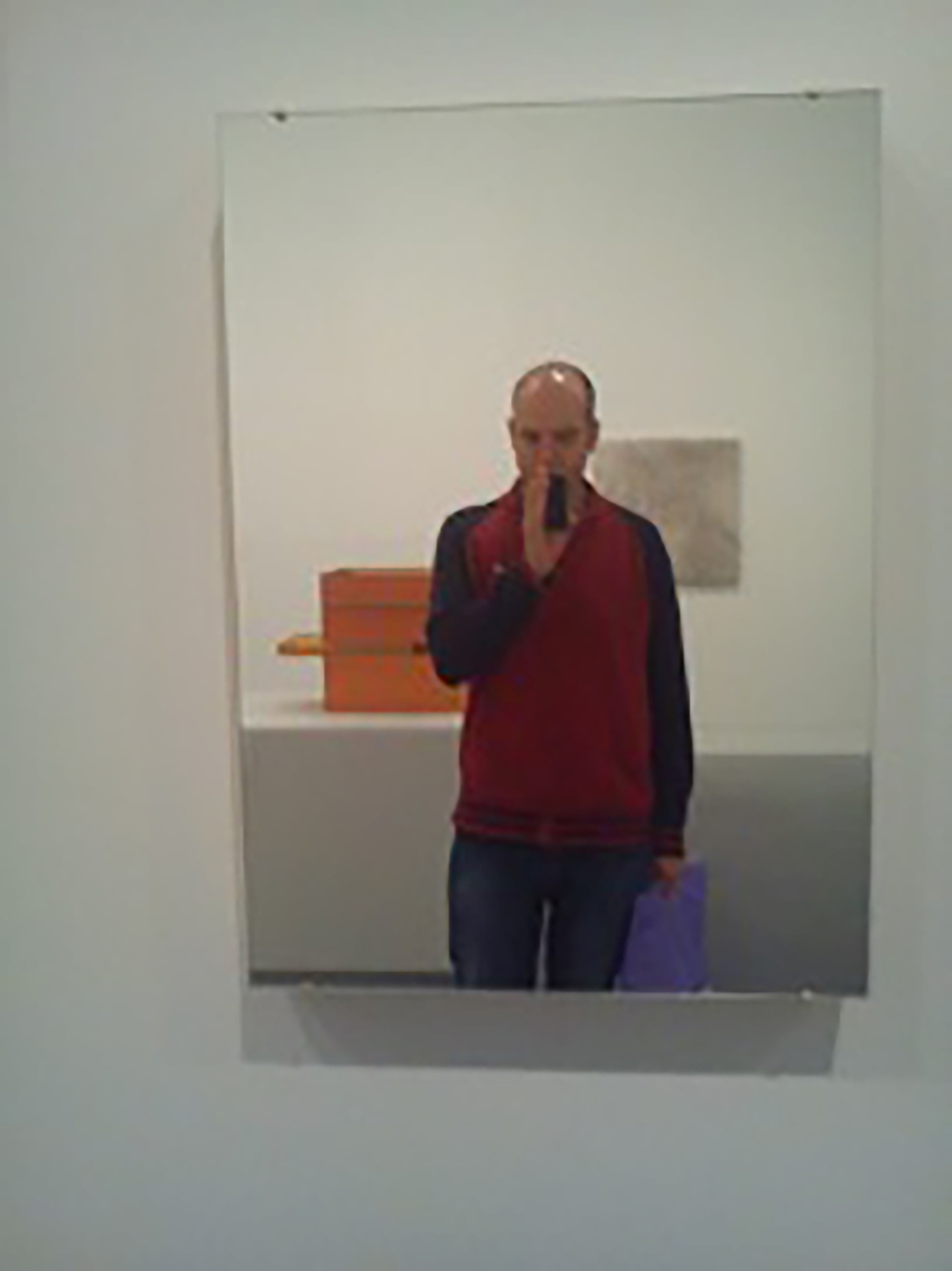
Fig. 1: Art & Language (Michael Baldwin), Untitled Painting, 1965, mirror mounted on canvas, Photo by Andrew Bracey
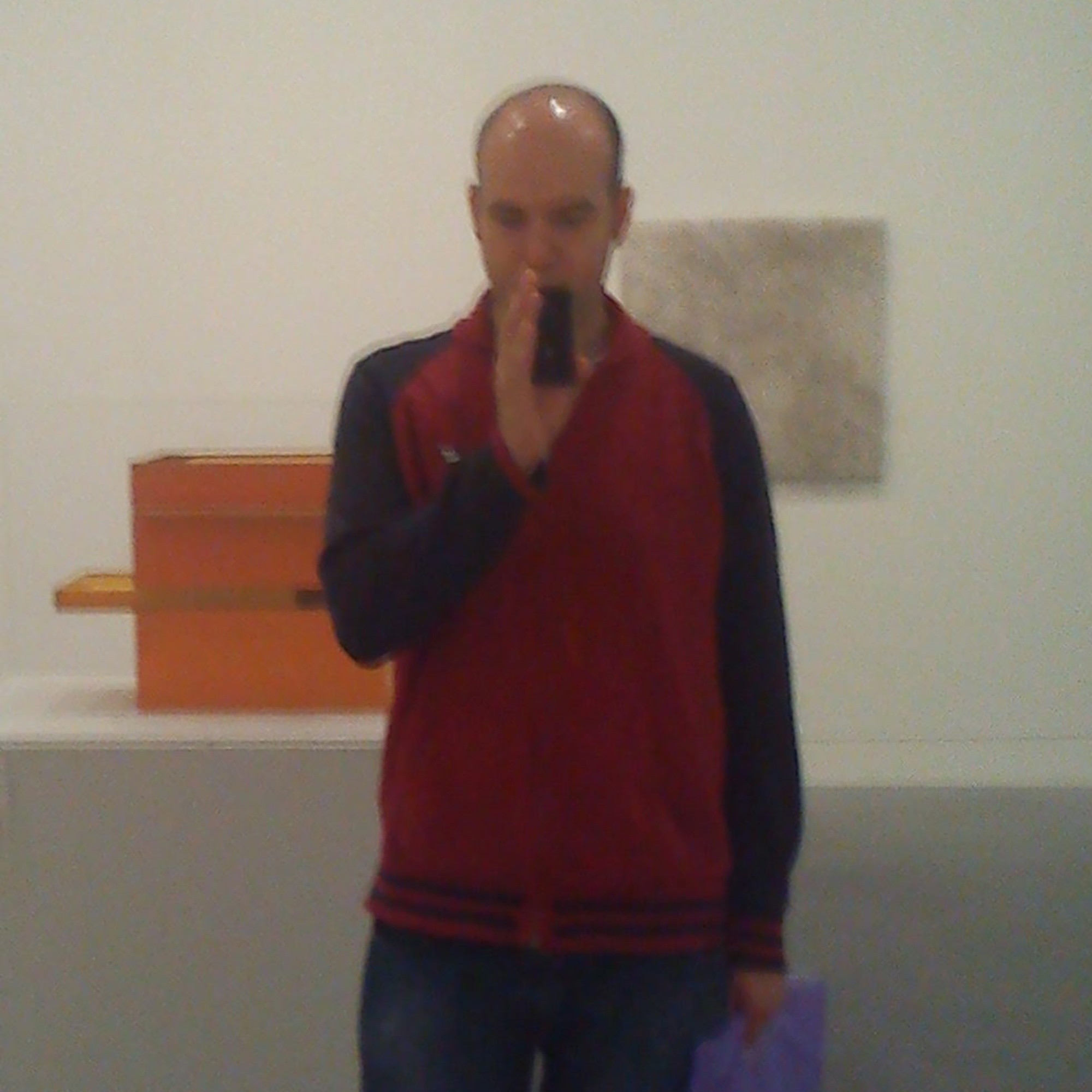
Fig. 2: Andrew Bracey, Reflected Self-Portrait (Art & Language), 2024, digital photograph, Photo by Andrew Bracey
Figure 1 is a photograph of the conceptual artists’ group Art & Language’s Untitled Painting (1965), a critique of Modernist painting evident through the title and conceptual positioning. The mirror-as-painting removes the artist’s control over what is depicted, instead representing the viewer and their environment through reflection. However, as the artists observe, the work is among the most popular in the Tate Gallery’s collection, largely because it is “good for selfies”.1
Figure 2 is an image from Reflected Self-Portraits (2024), an ongoing series of approximately 850 photographs that appropriate the reflective surfaces of artworks to create a self-portrait. This image was made by directing a phone camera at Untitled Painting, simultaneously documenting myself and a detail of Art & Language’s piece. While the photographs have been taken since 2007, it was not until 2024 that Reflected Self-Portraits was consolidated as a practice research project presented in physical exhibitions, on Instagram (@reflectedselfportrait) and the Research Catalogue.2 The process of producing these images is deliberately reductive. I move through galleries with a ‘magpie’ attention to reflective surfaces, selecting works solely based on whether their material properties can generate an image of my reflection. The encounter is brief and pragmatic: if the surface records my presence, I photograph it. Other interpretative or art-historical qualities are set aside in favour of this single material condition.
I am not motivated to create good photographs of artworks, many are ‘noisy,’ blurry, and fuzzy. In this sense, Reflected Self-Portraits corresponds to artist Hito Steyerl’s notion of the “poor image,” as “a copy in motion. Its quality is bad, its resolution substandard. As it accelerates, it deteriorates.”3 This introduces a digital materiality in which a Benjaminian aura shifts from the permanence of the original artwork to the transience of the digital copy, subject to circulation, fragmentation and exploitation. Steyerl’s idea is particularly relevant given the project’s Instagram platform, where images operate beyond my control; released from the fixity of the original artwork, the photographs are open to distribution, reuse and further appropriation. This mode of working also produces a particular form of bodily encounter. In order to register my reflection, I adopt positions not typically associated with viewing artworks (stretching, crouching, leaning, or standing at oblique angles) so that the camera aligns with the reflective surface. The resulting image is therefore not only a record of the artwork, but a record of a specific physical negotiation between body, object and device.
This text serves a dual purpose. Firstly, Reflected Self-Portraits is used as a practice-led lens through which to interrogate received theoretical framings of appropriation art. Secondly, by foregrounding the artist-maker’s perspective, the project exposes limitations in postmodern and semiotic interpretations (particularly those shaped by October journal discourse) by attending to material, affective, and tacit motivations neglected in dominant accounts. The critical framework referred to here is closely tied to the Pictures exhibition (Artists Space, New York, 1977), curated by art historian Douglas Crimp, and his subsequent 1979 essay in October, which together defined what is now termed the “Pictures Generation”. This loose grouping of artists, including Sherrie Levine, Cindy Sherman, Robert Longo, Richard Prince, and Louise Lawler, engaged with pre-existing images drawn from mass media, advertising, and art history in order to question notions of originality, authorship, and representation. Central to Crimp’s account is the idea that artworks operate as “structures of signification,”4 in which images are understood not as autonomous originals but as part of a stratified field of references, where “underneath each picture there is always another picture.”5 Influenced by poststructuralist semiotics, this framework prioritized the circulation and reinterpretation of signs over material or authorial concerns, establishing a postmodern paradigm that has profoundly shaped the interpretation of appropriation art.6
Reflected Self-Portraits as Parasitic Appropriation Art
Through cropping, recontextualization, captioning, or repetition, Pictures artists challenged assumptions of originality, authorship, and ownership. As Crimp suggests, these practices produce images that are estranged from their prior functions and repositioned within new discursive contexts. Rephotography, central to appropriation art, has been framed as an effort to produce images operating primarily at the level of signs. This semiotic framework is exemplified in Levine’s appropriations, which foreground layers of citation and borrowing rather than singular authorship. For example, in Untitled, after Edward Weston (1980), Levine exposes authorship as contingent rather than originary, a position art historian Rosalind Krauss describes as opening the image to “a long line of claimants”.7 By conceptually focusing on what Krauss describes as an “act of theft,”8 Levine suggests that Weston used familiar tropes in his photographic compositions, such as the cut-off torso traceable to ancient sculpture, which continues into her rephotographs. Such readings align closely with the Pictures Generation’s challenge to modernist originality.
Reflected Self-Portraits can also be understood as an act of re-signification, insofar as the appropriated artwork becomes a mediated surface through which a new relationship emerges between viewer, artwork and photographic act.9 However, the intervention here is materially and temporally fleeting; the reflected presence does not overwrite the host work but briefly inhabits it for the camera, producing a shifting relation between the subject (self-portrait) and the signified (the artwork). Each photograph functions as both a self-portrait and a fragmentary document of another work. The image is neither a full reproduction nor a purely subjective gesture, but a partial overlap in which the artwork’s surface conditions determine the form the self-portrait can take. The resulting image is contingent: distorted, fragmented, or incomplete depending on the material qualities of the host object. For example, Levine’s Papua New Guinea Figure (2014), originally presented as a bronze sculpture commenting on the commodification of non-Western objects,10 appears in the Reflected Self-Portraits series with little relation to Levine’s stated intentions. The photograph records a partial, spatial encounter, which complicates an established reading of appropriation art, as the work does not seek to extract or critique meaning from the appropriated artwork, but instead emerges from a contingent encounter with its material properties, particularly reflectivity, which generates the image. In this sense, the photographs operate less as signs to be decoded and more as traces of a situated encounter, where the appropriated artwork actively conditions what can be seen and recorded.
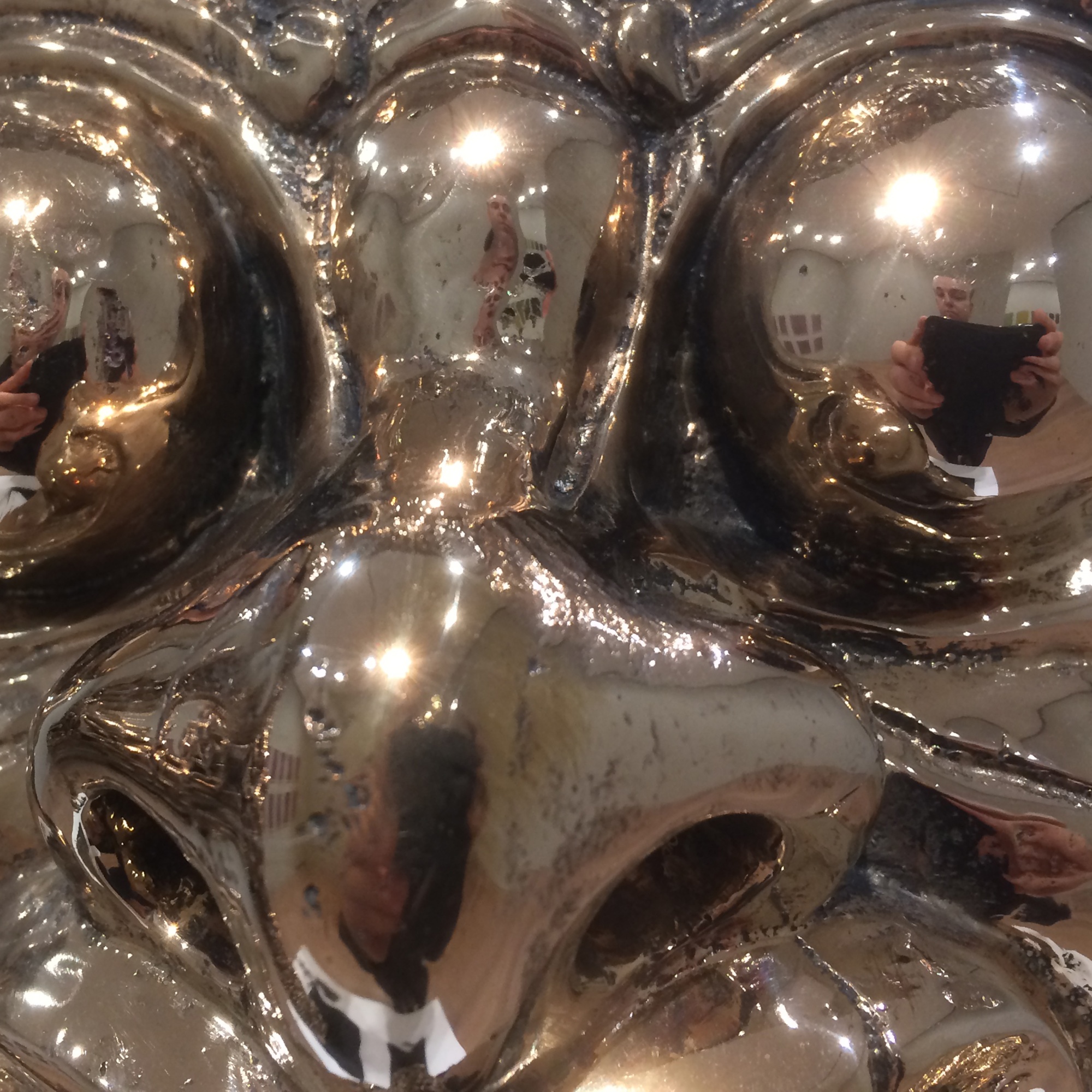
Fig. 3: Andrew Bracey, Reflected Self-Portrait (Sherrie Levine) , 2024, digital photograph, Photo by Andrew Bracey
The artistic act in Reflected Self-Portraits can be understood as parasitic, in a metaphorical sense as an uninvited guest that operates within an existing system at the expense of others. While biological parasitism implies harm to the host, philosopher Michel Serres reframes the parasite as a disruptive but productive force; an agent of interruption, reconfiguring and transforming existing systems. In this expanded sense, parasitism encompasses a range of interactions from exploitation to mutualism. This framing allows Reflected Self-Portraits to be understood as operating through recontextualization rather than deflationary criticism. While Pictures artists similarly disrupted notions of authenticity and authorship, the near-exclusive critical focus on semiotics (largely driven by October) narrowed the interpretive field, sidelining materiality and experiential motivations. Rather than functioning as a parasitic act of appropriation, Reflected Self-Portraits demonstrates how meaning can arise through proximity, contingency, and material responsiveness.
Conditions for and limitations of Parasitic Appropriation Art
Pictures Generation appropriation marked a necessary shift in the theorization of art, reinforcing a break from the problematics of modernism. However, the postmodern framing that accompanied it has continued to shape interpretations of appropriation art in limiting ways. Sarah Evans argues that October writers were less concerned with the artworks themselves than with the emergence of postmodern theory, focusing on models of signification rather than the practices they described.11 This emphasis contributed to an interpretive framework that, as AnnMarie Perl suggests, held significant authority within the art world, making alternative readings difficult to sustain.12 Curator Lisa Phillips observes that critical discourse often “insulate[d] the art, to keep its interpretation on a more theoretical level than the artists intended”13 and therefore, overlooking other dimensions. Phillips continues by pointing out what was missed out by the focus on postmodern theories for appropriation art’s framing: “Overlooked were expressions of fears, desires, and obsessions, not to mention the experience of visual pleasure. The limitations of the theoretical terms became increasingly apparent as the work developed in unexpected ways.”14 Appropriation art, in this sense, has always exceeded the terms used to define it.
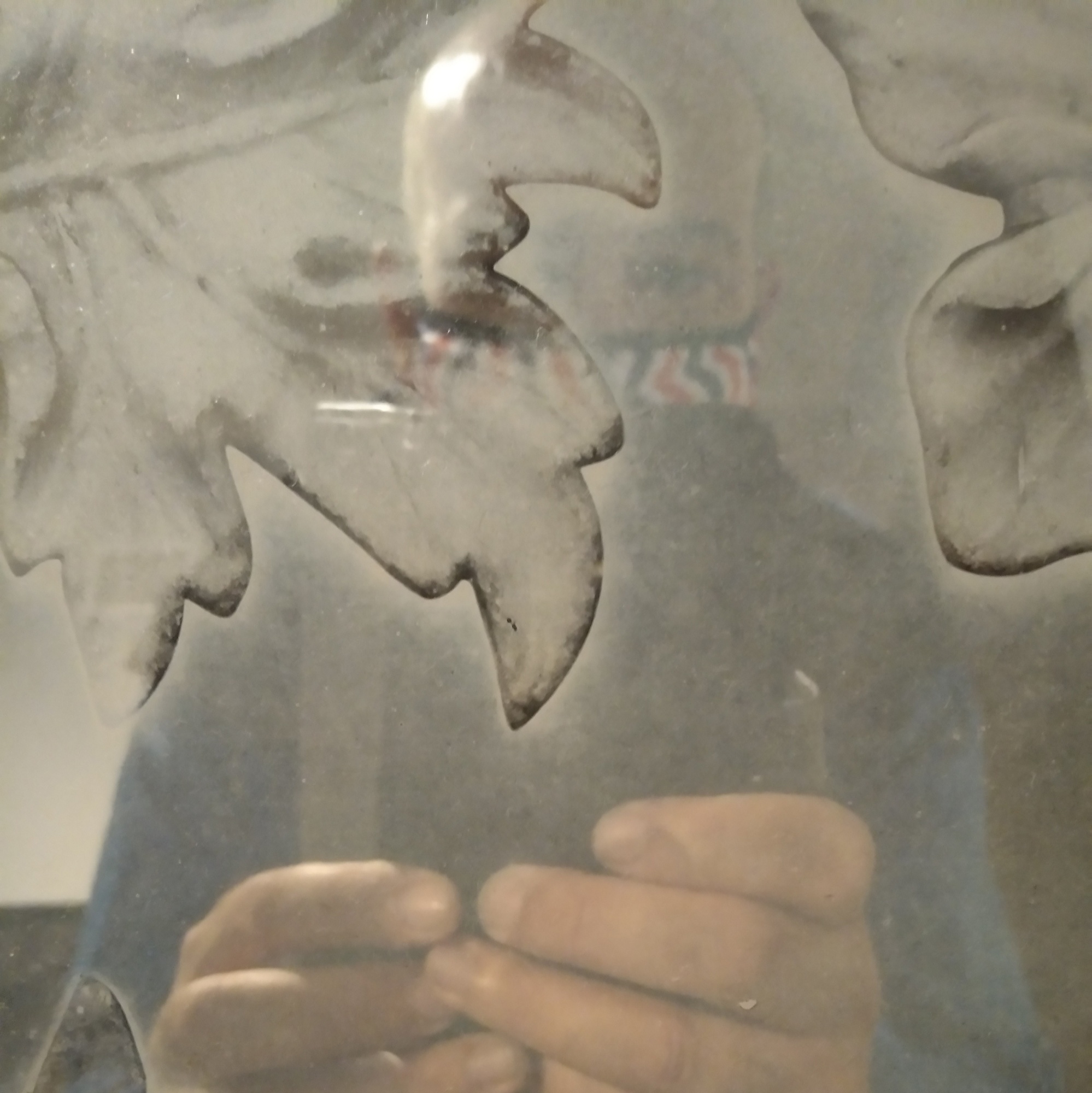
Fig. 4: Andrew Bracey, Reflected Self-Portrait (Alastair Mackie), 2024, digital photograph, Photo by Andrew Bracey
Revisiting the Pictures exhibition reinforces this point. Reflecting on its 2001 restaging, again at Artists Space, curator Scott Rothkopf noted the works were “rough and quirky, betraying a hand often presumed to be purposefully absent from ‘Pictures’ art.”15 Encountering the works directly, he questions the extent to which Crimp’s critical claims had overlooked their tactile and visual specificity.16 Artists associated with the Pictures Generation repeatedly complicated this framing. Levine, for example, expressed frustration with what she termed “mindless appropriation,”17 noting that her work was often read not as photographs or material objects but as “position papers.”18 Such responses suggest a desire among artists for engagement with medium and form alongside critical interpretation.
Lawler likewise emphasizes the role of intuition and process, noting that excessive clarity risks rendering work programmatic.19 Her reflections highlight a tension between making and interpretation, in which the experiential and affective dimensions of practice resist full articulation within theoretical frameworks.20 Crimp acknowledges that while Lawler’s work can be understood as institutional critique, an interpretation that “may be true and accurate,”21 it does not capture something crucial. He identifies an emotional impact that is “much more difficult to speak about,”22 emphasizing the importance of the creative process itself. Taken together, these artists’ perspectives suggest that the postmodern framing of appropriation art, while historically significant, narrowed the terms of engagement by prioritizing semiotic critique over material, affective, and experiential dimensions. These elements were not absent from the work but were often marginalized within its critical reception.
Taken together, these artists’ perspectives suggest that the postmodern framing of appropriation art, while historically significant, narrowed the terms of engagement by prioritising semiotic critique over material, affective, and experiential dimensions.
Many artists associated with the Pictures Generation produced texts to accompany their works, often stating their intentions for appropriation were clear. While often presented as aligned with the “death of the author”,23 these explanatory texts nevertheless guided viewers and critics towards specific theoretical positions, sometimes at the expense of other material and experiential qualities. Art historian Isabelle Graw critiques an instrumentalized framing of appropriation art, arguing that it narrows interpretation, noting that this “model of appropriating, parasitic behaviour replaced the model of the strong subject that creates something new using its resources.”24
Interviews with Pictures artists indicate a wider range of motivations than the postmodern theoretical framing developed by Crimp, Krauss, Craig Owens, and others.25 Anthony Grudin notes that the egalitarian politics of the Pictures Generation prompted a critical backlash intended to contain appropriation art by insisting on its critique of institutions, media, and sign systems.26 In this sense, postmodern theory did not simply situate appropriation art practices but functioned to discipline and delimit them. This critical control was reinforced curatorially, particularly through the centrality of text panels, which aligned the work with postmodern theoretical frameworks for public interpretation. What emerged was “a kind of self-congratulatory feedback loop”27 in which theory operated as inspiration and the benchmark for interpretation, resulting in practices that “grew subordinate to the theory that purported to explain it.”28
Within this context, affective or enthusiastic engagement with appropriated material was treated with suspicion. Reflecting on this period, Graw recalls that artists who appeared to be subjectively invested in their appropriated material were perceived as having “joined the enemy camp,”29 since allowing the appropriated object any agency risked “falling back on modernist premises, and this, as already indicated, was to be avoided at all costs.”30 This rhetoric reflects the critical climate of the 1970s and 1980s, in which a scepticism of modernist stances fostered an oppositional dialectic. While such resistance was historically understandable, it encouraged a dualistic framing that excluded positive attention to materiality, medium or enthusiasm towards the appropriated object as these were seen to be synonymous with modernism. Philosopher Peter Osborne’s analysis of October further clarifies this position, noting Anglo-American receptions of French theory fostered a dismissal of formal and material concerns in favour of ideological readings.31 Within this framework, formalism itself becomes a pejorative term rather than a site of inquiry.
The work does not seek to decode or critique the source image, but to generate a new one through a materially contingent interaction with it. Meaning emerges not from what is read into the artwork, but from what occurs in the moment of making.
As suggested above, Serres’s theoretical reworking of parasitism offers a way beyond this impasse. Rather than treating the parasite solely as a destructive figure, Serres reimagines it as a figure that interrupts established systems, capable of generating new possibilities.32 In The Parasite, unequal exchanges are shown not only to exploit but also to generate unforeseen forms of interaction.33 Significantly, in The Natural Contract, Serres extends the metaphor by suggesting that unchecked exploitation endangers both host and parasite. He considers how the parasite can become a former parasite, forming a more balanced, even mutualist symbolic relationship with the host.34 This metaphor of transformation is useful in anticipating a shift in positioning towards mutualist appropriation art.
The ‘parasitical’ condition identified in this article lies less in the act of appropriation itself than in the interpretive framework that has come to dominate it. By privileging certain readings over others, this framework has constrained the ways in which appropriation art can be understood. At the same time, the persistence of these alternative positions within artists’ own accounts suggests that appropriation has always involved a more complex set of motivations than those captured by postmodern theory alone. It is this broader field of practice, encompassing material engagement, affect, and tacit knowledge, that informs my own use of appropriation. In Reflected Self-Portraits, this expanded field is enacted through a practice that prioritizes encounter over interpretation. The work does not seek to decode or critique the source image, but to generate a new one through a materially contingent interaction with it. Meaning emerges not from what is read into the artwork, but from what occurs in the moment of making.
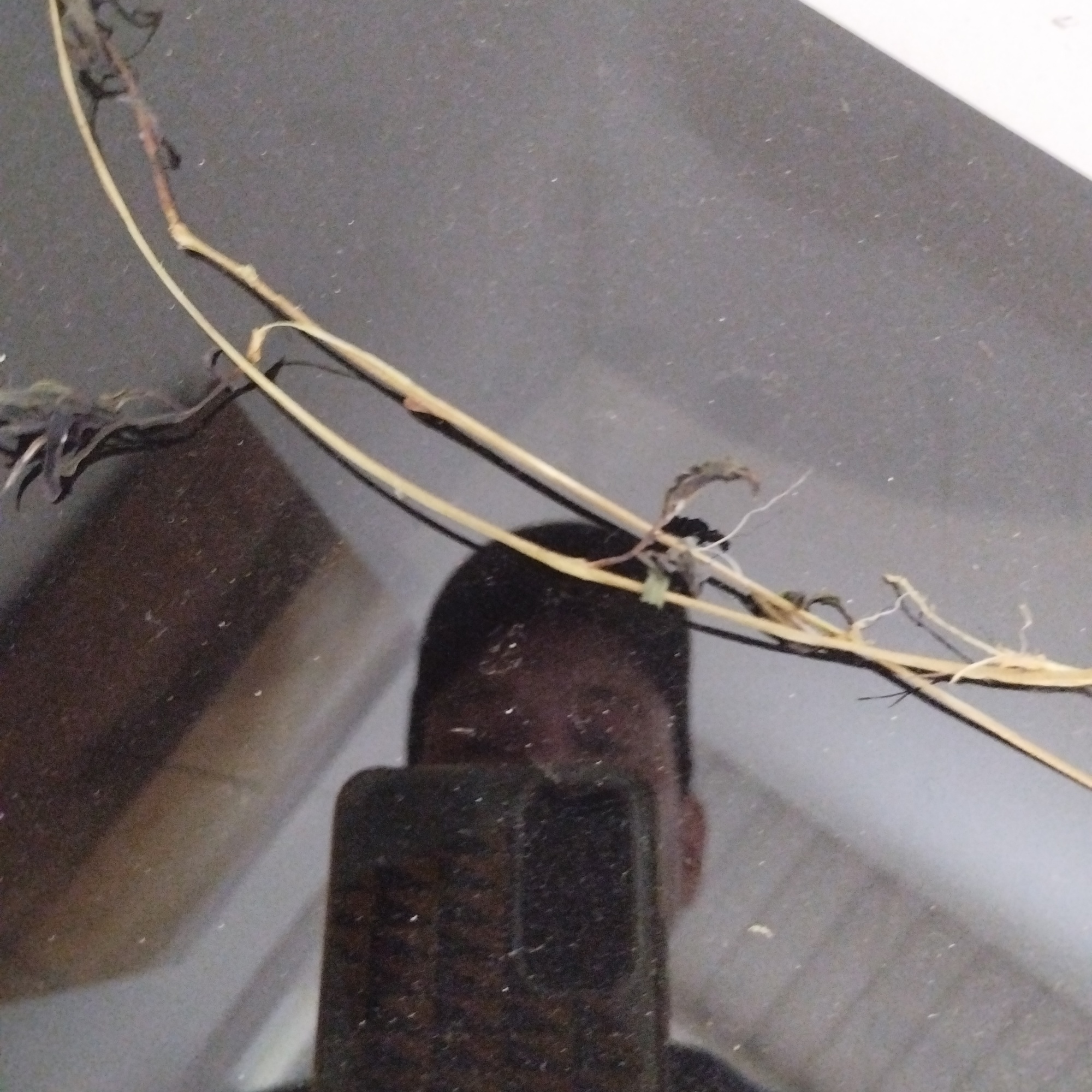
Fig. 5: Andrew Bracey, Reflected Self-Portrait (Fiona Carruthers), 2024, digital photograph, Photo by Andrew Bracey
Turn of the appropriated screw
An expected art historical reading of Reflected Self-Portraits might focus on the prominence of my reflected image in other artists’ artworks, interpreting this as the ‘birth of the reader.’ By positioning myself within the reflective surfaces of artworks, the work could be aligned within conceptual positions that critique authorship and destabilize fixed meaning through shifting positions of creator and observer. However, postmodern theoretical concerns are not my primary motivation for working with appropriated material in this work. I remain a ‘mere’ reflection in other artists’ works, rather than authorial insertion. The work is driven instead by attention to reflective materials and their surfaces, distortions and capacities for recording images. My reflection appears because it is the most immediate and readily available means of registering these material encounters. This approach aligns with what I term ‘making-looking’ as a form of attention oriented towards producing images rather than interpreting them.35 The act of looking is guided not by a search for meaning, but by a search for the conditions under which something can be made. In this case, that condition is the capacity of a surface to return an image.
The ‘parasitical’ condition identified in this article lies less in the act of appropriation itself than in the interpretive framework that has come to dominate it.
My approach differs from dominant readings of appropriation art because I encounter artworks from the position of an artist-maker rather than a theorist or art historian. The distinction I draw between parasitical and mutualist appropriation art corresponds to the difference between propositional knowledge (knowing that) and tacit knowledge (knowing how). Artist Dom Heffer argues that artistic values are increasingly under threat in a culture that favours symbolic identification. Drawing on Franco “Bifo” Berardi, he describes how society suffers “from over-signification, a saturation of signs, leading to what he calls ‘semiotic inflation’ – suggesting that the proliferation of the signified creates less meaning, not more.”36 This diagnosis resonates strongly with my experience of appropriation art specifically, where an overemphasis on semiotics overshadows speculative and material qualities that artists value. As media theorist Arjen Mulder suggests, the question shifts from what an artwork signifies, to what it enables through the active agency of the artwork, asking what actions it enables and what forms of encounter it produces.37 These qualities are not easily articulated verbally, yet they are central to how artworks are made, encountered and understood through practice. Reflected Self-Portraits is the outcome not of interpreting an artwork, but of interacting with it.
As an artist, I prioritize tacit knowledge over propositional articulation. Philosopher Paul K. Moser defines propositional knowledge as justified true belief.38 While such knowledge is culturally privileged, it overlooks the value and role of tacit knowledge, which is acquired through embodied practice and participation.39 Polymath Michael Polanyi argues that tacit knowledge is inseparable from the knower, making it intrinsic to all knowledge.40 The personal and subjective aspects of practice, often viewed with suspicion in theoretical discourse, are not obstacles to understanding but conditions of it. In this respect, postmodern theorization of appropriation art has tended to prioritize propositional reading over tacit engagement, reinforcing a parasitic framework that limits how artworks are encountered and valued.
A way forward: Two-way influence for Appropriation Art
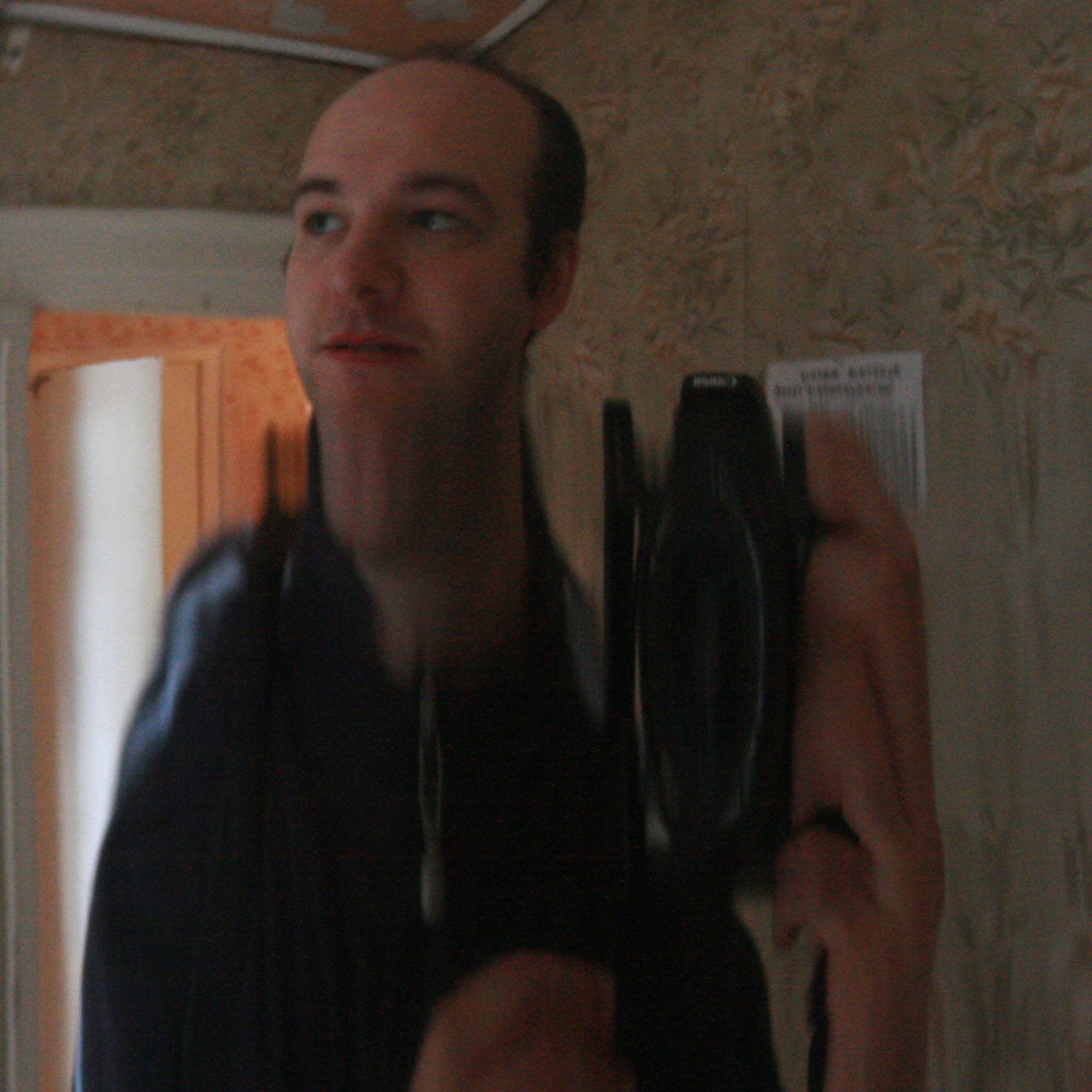
Fig. 6: Andrew Bracey, Reflected Self-Portrait (Adam Fuss), 2024, digital photograph, Photo by Andrew Bracey
Reflected Self-Portraits proposes a model of appropriation grounded in reciprocal influence. Rather than a one-sided relationship between two agents (the appropriating artist and the appropriated work), the project suggests a more complex interaction, where mutual influence emerges as a priority, producing a shifting and contingent exchange rather than a fixed hierarchy. This challenges interpretations in which the contemporary artist is positioned as the primary agent, recontextualizing passive source material. As art historian Michael Baxandall suggests, accounts of influence often privilege the interpreting subject,41 which risks overlooking how the encountered artwork actively shapes the conditions of response. Poet T. S. Eliot similarly proposes that the present reshapes the past as much as it is shaped by it.42 As art historian and curator Verena Gamper points out, this “leaves aside the possibility that the material appropriated may in turn actively impact the appropriators by affecting, infecting and forcing them to respond.”43 In this sense, appropriation becomes a dialogical process, in which the artwork is not inert but participates in the production of meaning.
This reciprocal model is echoed in artists’ own accounts. Lawler describes art as “a collaboration with what came before you and what comes after you.”44 These positions point toward a conception of influence as asynchronous, relational, and bidirectional. From this perspective, the metaphor of parasitism can be extended beyond a logic of extraction toward one of transformation towards both the appropriated material and appropriation artworks. The parasite need not be understood as purely exploitative, but as a figure capable of generating new relations. Appropriation art can shift from a model of dominance toward one of mutual implication, in which appropriated material, artworks, viewers and artists are altered through the encounter.45 In Reflected Self-Portraits, this reciprocity operates at the level of material encounter: the artwork conditions the image that can be made, while the act of photographing repositions the work within a new, transient visual economy.
Within this framework, parasitical appropriation art can be understood as a historically specific mode of theoretical interpretation that privileged semiotic critique. While this framework remains productive, it does not exhaust the possibilities of appropriation. Practices such as Reflected Self‑Portraits suggest that material, affective, and tacit engagements are equally constitutive of how meaning is produced. Attending to these dimensions does not reject postmodern readings but expands them. By foregrounding the perspectives of artists and the conditions of making, appropriation can be understood not only as a critique of images and institutions, but as an embodied and relational practice. In this sense, the value of Reflected Self‑Portraits lies not in opposing existing interpretations but in demonstrating how alternative forms of engagement, rooted in material encounter, intuition and making, can coexist with and extend established accounts of appropriation art.
+++
Andrew Bracey
is an artist, researcher and senior lecturer in Fine Art at the University of Lincoln. He is fascinated by the slippages between the original/reproduction, artist/curator, painter/painting. His current PhD by Practice is grappling with the overlooked importance of the maker-artist in appropriation art.
Footnotes
- “Art & Language: Conceptual Art, Mirrors and Selfies.” Tate website, 22 Apr. 2016, tate.org.uk/art/artists/art-language-2202/art-language-conceptual-art-mirrors-and-selfies. Accessed 12 Dec. 2024. ↩
- Bracey, Andrew. “Reflected Self-Portraits.” Research Catalogue, 2024, researchcatalogue.net/view/3015063/3015064. Accessed 24 Feb. 2025. ↩
- Steyerl, Hito. “In Defense of the Poor Image.” The Wretched of the Screen. Sternberg Press, 2012, pp. 42-44. ↩
- Crimp, Douglas. “Pictures.” October, 8, 1979, pp. 75-88 (p. 87). ↩
- Ibid., pp. 85-87. ↩
- Ibid., pp. 75-88; Crimp, Douglas. “The Photographic Activity of Postmodernism.” On the Museum’s Ruins. MIT Press, 2008, pp. 108-25; Owens, Craig. “The Allegorical Impulse: Toward a Theory of Postmodernism.” October, 12, 1980, pp. 67-86; Buchloh, Benjamin. “Allegorical Procedures.” Artforum, vol. 21, no. 1, 1982, pp. 43-56. ↩
- Krauss, Rosalind. “1977.” Art Since 1900: Modernism, Antimodernism, Postmodernism, edited by Hal Foster et al., Thames & Hudson, 2004, pp. 624-27. ↩
- Krauss, Rosalind. The Originality of the Avant-Garde and Other Modernist Myths. MIT Press, 1985, p. 168. ↩
- For more on the relationship between the subject and the signified, particularly in an art context, see Barthes, Roland. Mythologies. Vintage, 2009; Mitchell, W. J. T. Iconology: Image, Text, Ideology. University of Chicago Press, 2009; and Bal, Mieke. Reading “Rembrandt”: Beyond the Word-Image Opposition. Amsterdam University Press, 2006. ↩
- In more recent works such as Bird Mask (2014) and Tengu Element (2015), Levine appropriates objects from outside of the Western canon that are re-presented as cast bronze sculptures as a comment on the commodification of artistic objects. See: Johnson, Ken. “Sherrie Levine: ‘Red Yellow Blue.’” New York Times, 9 May 2014, nytimes.com/2014/05/09/arts/design/sherrie-levine-red-yellow-blue.html. Accessed 13 Feb. 2025. ↩
- Evans specifically discussed those aligned with Hallwalls – an alternative Buffalo artist-run space – such as Cindy Sherman and Robert Longo. “Arguably, this is because Crimp et al. were interested not in the art itself but in the advent of post-modernism and, more particularly, in the theories of signification that made it fascinating.” Evans, Sarah. “There’s No Place Like Hallwalls: Alternative-Space Installations in an Artists’ Community.” Oxford Art Journal, vol. 32, no. 1, 2009, p. 98. ↩
- Perl notes: “because these critiques were developed by star exemplars of criticality, they had the treasonous and embarrassing quality of defections or desertions.” Perl, AnneMarie. “Defining Criticality as an Historical Object of the 1970s and 1980s.” Beyond Critique: Contemporary Art in Theory, Practice, and Instruction, edited by Pamela Fraser and Roger Rothman, Bloomsbury Academic, 2017, p. 44. ↩
- Phillips, Lisa. “People Keep Asking: An Introduction.” Richard Prince, edited by Lisa Phillips, Whitney Museum of American Art, 2019, p. 33. ↩
- Ibid. ↩
- Rothkopf, Scott. “Hit or Myth.” Artforum, vol. 40, no. 2, 2001, p. 133. ↩
- Ibid., p. 134. The original 1977 catalogue essay’s conclusion includes a Greenbergian formal reading of the artists, highlighting that their images address the psychology of the image and reassert the relevance of the entire modernist tradition originating from Symbolism. In the 1979 October article, this sentiment is removed and his tone becomes more radical: “If postmodernism is to have theoretical value, it cannot be used merely as another chronological term; rather it must disclose the particular nature of a breach with modernism.” (Crimp, “Pictures”, p. 75). ↩
- Marzorati, Gerald. “Art in the (Re)Making.” Art News, vol. 85, no. 5, 1986, p. 93. ↩
- Ibid. Rothkopf notes from the reshowing of Pictures how the artists had become slicker over the years, stating that Levine’s work in the show was familiar due to her reuse of the silhouetted heads in later works. Levine’s works in the original and 2001 restaging of Pictures featured silhouetted heads constructed from painted stripes of fluorescent tempera paint. Rothkopf describes her palette and touch as “charming and perplexing,” noting these formal and material details seeped outside the rigid boundaries Crimp inscribed (Rothkopf, “Hit or Myth”, p. 134). ↩
- Lawler is closely associated with Crimp, who has extensively written about her, including a visual essay in his published collected writings. Crimp, Douglas. On the Museum’s Ruins. MIT Press, 2008. ↩
- Lawler considers too much clarity can stifle creativity, stating, “I’m not even comfortable taking photographs when I know what I’m taking… Speaking about the work can make it seem programmatic, whereas what actually produces the work is not a program, but the activity of producing it.” Crimp, Douglas, and Louise Lawler. “Prominence Given, Authority Taken.” Louise Lawler, edited by Helen Molesworth and Taylor Walsh, MIT Press, 2013, pp. 33-48 (p. 39). ↩
- Ibid. ↩
- Ibid. ↩
- Barthes, Roland. “The Death of the Author.” Image, Music, Text. Fontana Press, 1987. ↩
- Graw, Isabelle. “Dedication Replacing Appropriation: Fascination, Subversion, and Disposition.” Louise Lawler and Others, edited by Philipp Kaiser, Hatje Cantz, 2004, p. 45. ↩
- Buskirk, Martha, et al. “Interviews with Sherrie Levine, Louise Lawler, and Fred Wilson.” October, vol. 70, 1994, pp. 98-112; Crimp and Lawler. “Prominence Given, Authority Taken.”; Morgan, Stuart, and Richard Prince. “Tell Me Everything: Richard Prince Interviewed by Stuart Morgan.” Artscribe International, no. 73, 1989, pp. 46-51. ↩
- Grudin, Anthony E. “‘The People Were Smart and Hungry’: Criticality, Egalitarianism, and the Pictures Generation.” Beyond Critique: Contemporary Art in Theory, Practice, and Instruction, edited by Pamela Fraser and Roger Rothman, Bloomsbury Academic, 2017, p. 60. ↩
- Lang, Martin, and Tom Grimwood. “Socially Engaged Art, Post-Truth and the Monumentalising of Democracy.” Journal of Cultural Management and Cultural Policy / Zeitschrift für Kulturmanagement und Kulturpolitik, vol. 9, no. 1, July 2023, p. 68. ↩
- Kissick, Dean. “The Painted Protest: How Politics Destroyed Contemporary Art.” Harper’s Magazine, Dec. 2024, harpers.org/archive/2024/12/the-painted-protest-dean-kissick-contemporary-art. Accessed 26 Feb. 2025. ↩
- Graw, “Dedication Replacing Appropriation”, p. 52. ↩
- Ibid. ↩
- Osborne, Peter. The Postconceptual Condition: Critical Essays. Verso, 2018, p. 93. ↩
- Brown, Steven D. “In Praise of the Parasite: The Dark Organizational Theory of Michel Serres.” Informática na Educação: Teoria & Prática, vol. 16, no. 1, June 2013, p. 16. ↩
- Serres complicates the traditional parasite-as-pest model by showing how parasitic relations can shift and generate new forms of exchange, as illustrated in his discussion of unequal relations in Serres, Michel. The Parasite. University of Minnesota Press, 2007, p. 35. ↩
- While this shift moves beyond the strict biological definition of parasitism – which requires one party to benefit at the expense of the other – it is precisely this symbolic flexibility that Serres uses to explore broader cultural and ecological dynamics. He describes how in an unregulated culture, “pure mastery is turning back on itself. Thus, former parasites have to become symbionts; the excesses they committed against their hosts put the parasites in mortal danger, for dead hosts can no longer feed or house them… This is history’s bifurcation: either death or symbiosis.” Serres, Michel. The Natural Contract. University of Michigan Press, 1995, p. 34. ↩
- Making-looking is a practice-led methodology developed through my PhD research, which understands looking and making as coextensive processes rather than sequential stages. It describes how knowledge emerges through materially engaged, iterative encounters with artworks, rather than through interpretation alone. The approach foregrounds several overlapping modalities (tacit knowledge, wandering attention, peripheral looking, affective engagement, and embodied speculation) that shape how artists attend to and work with images. ↩
- Heffer, Dom. “Identifying Transferable Qualities from Studio Practice to Teaching: Inwards Looking, Outwards Facing.” Co-Operative Education, Politics, and Art: Creative, Critical, and Community Resistance to Corporate Higher Education, edited by Richard Hudson-Miles and Jackie Goodman, Routledge, 2025, p. 115; Berardi, Franco. And: Phenomenology of the End. Semiotext(e), 2015. ↩
- Mulder, Arjen. From Image to Interaction: Meaning and Agency in the Arts. V2 Publ., 2010, p. 15. ↩
- Moser, Paul K. “Propositional Knowledge.” Philosophical Studies: An International Journal for Philosophy in the Analytic Tradition, vol. 52, no. 1, 1987, pp. 91-114. ↩
- Johnson, Gabbrielle M. “The Structure of Bias.” Mind, vol. 129, no. 516, Oct. 2020, pp. 1193-1236. ↩
- Polanyi, Michael. Knowing and Being: Essays by Michael Polanyi. University of Chicago Press, 1969, p. 152. ↩
- Baxandall’s scenario suggests that the traditionally influenced party (X) transforms into the influencer (Y): “If we think of Y rather than X as the agent, the vocabulary is much richer and more attractively diversified: draw on, resort to, avail oneself of, appropriate from, have recourse to, adapt, misunderstand, refer to, pick up, take on, engage with, react to, quote…” In this dynamic, the contemporary artist (Y) alters the perspectives and positions of the original artwork (X) through their actions and evaluations. Similarly, the parasitical appropriating artist has priority in the postmodern reading over how they interpret and alter the context of the appropriated material. Baxandall, Michael. Patterns of Intention: On the Historical Explanation of Pictures. First Edition, Yale University Press, 1985, p. 59. ↩
- Eliot, T. S. ‘Tradition and the Individual Talent’. Selected Essays, Faber & Faber, 1999, p. 56. ↩
- Gamper, Verena. “Appropriation as Dialogue: Artworks Among Themselves.’’ Remastered - The Art of Appropriation, edited by Florian Steininger and Verena Gamper, 1. Auflage, Walther König, 2017, p. 17. ↩
- Lawler, Louise. Louise Lawler: An Arrangement of Pictures. Assouline, 2000, p. 9. ↩
- I have previously written that artistic influence in appropriation art can be generatively bidirectional: “(j)ust as the position of the parasite can shift through perceptual positioning to even consume and include the parallel role of the host, so influence can become more complex than traditionally thought.” Bracey, Andrew. “Parasitical Paintings”. Journal of Contemporary Painting, vol. 4, no. 2, Oct. 2018, p. 342. ↩
More from this theme
Epidermis II
Charlotte Lybeer
Un-interrupted city
Christine Dysers
The Photo-Phenomenon
Yiling Hu, Xiaohuan Yu
More from this dossier
The hour of the monkey. The role of tension, tradition and repertoire in drama school
Clara van de Broek, Sara De Roo, Jan Joris Lamers
‘A whole lot of dead copycats’. Artistic property in jazz
Matthias Heyman
More from this edition
Teaching decoloniality in the art school. Lessons in decolonial pedagogy through the arts in Belgium (2018-2025)
U. Laura Nsengiyumva
Making space for trust. Scores as scaffolds for shared risk
Simona Kicurovska